
Before You Begin
The Faith Recovery Journal website is where to bring your grief without any shame.
Faith Recovery Journal is for grieving Christians whose pain is too raw, too private, and too exhausting to keep explaining to well-meaning people who, through no fault of their own, cannot understand.
Maybe you have family, friends, a church, a pastor, all praying for you, yet their presence does not help. You do not need company. You need comprehension; however, comprehension like that comes only from people who have carried the same kind of deep sorrow.
Someone who also suffered catastrophic loss built this website. Not an observer offering comfort from the outside, but a writer who knows its specific cost and made this space to give you what platitudes never could: room to grieve fully, honestly, for as long as it takes.

Even Your Best Friend Doesn't Really Understand
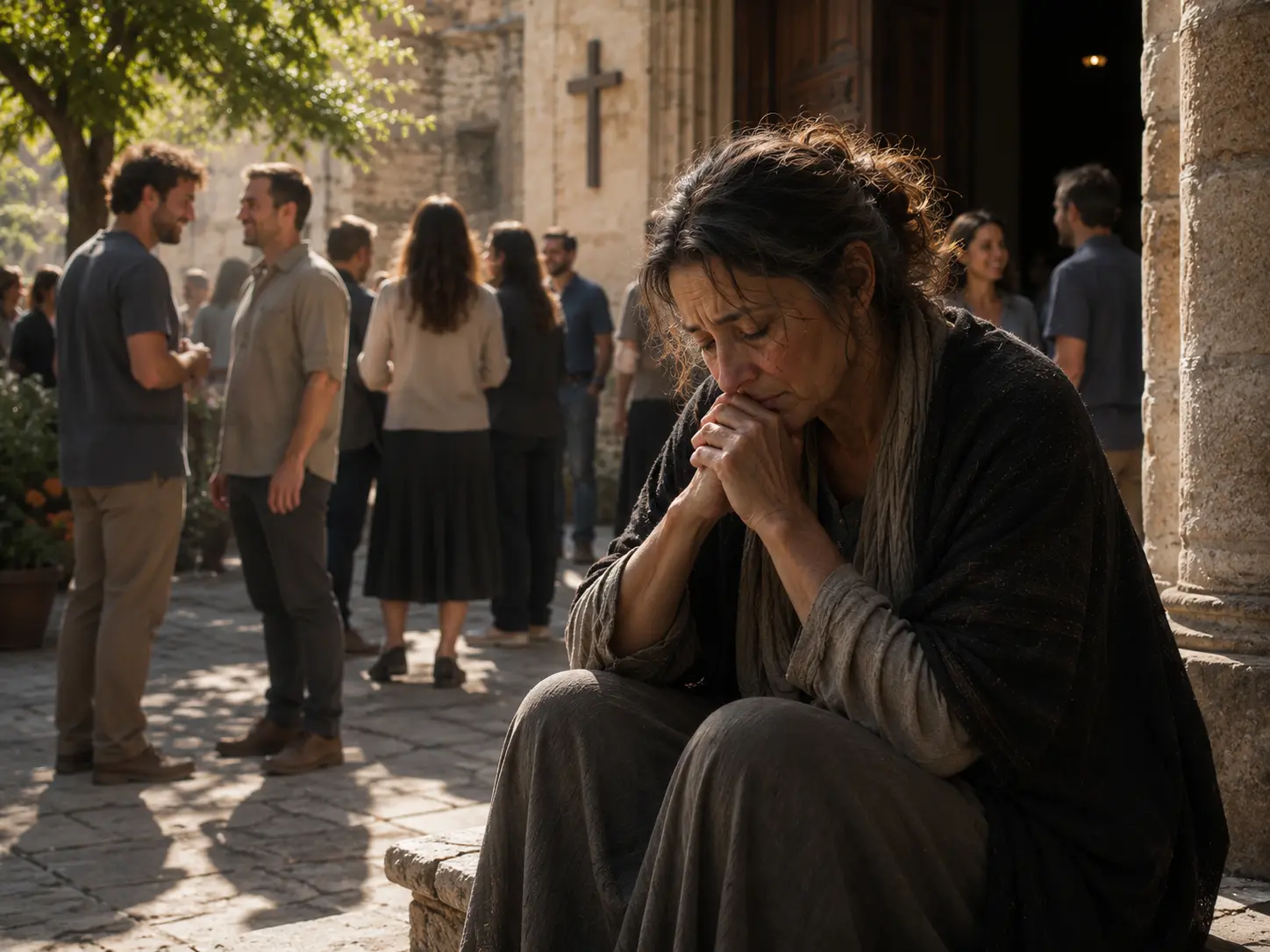
One of the loneliest parts of catastrophic grief is your isolation from others. Not physically, but emotionally. Your friends, family, and community may not have abandoned you. But each time they offer another well-meaning platitude, all you can do is smile sadly. Sometimes, it can feel as if you are the one comforting them.
After deep loss, the gap between what people say and what you feel can be insulting, even painful. Their words are meant to be kind, but kindness without understanding is merely empty, like a generic greeting on a Christmas card.

Why It's Hard to Discuss Your Grief
Because most people find that, at first, talking about it makes sorrow worse, not better.
You may also be frightened that other people will think you are being "too much," that your anger, fear, loneliness, or despair makes them uncomfortable, or that you're embarrassing your friends and family because they seem to think you ought to be coping better by now.
That's not all. Another reason talking about your grief is difficult is simply because you tire of constantly explaining yourself over and over, tiring of retelling the same story. You're tired of trying to describe a loss that others cannot truly understand, and you're definitely done with hearing quick answers, cheap platitudes, or well-meant words that make you feel even lonelier.
Grief often disturbs your faith. Even if you still believe in God, loss often leaves us feeling confused, abandoned, angry, numb, and ashamed of questions that seem disloyal to God. In some cases, such thoughts may feel too frightening to admit.
Again, sorrow seldom progresses in a neat, straightforward line. It disappears, then reappears, often unexpectedly triggered by something seemingly mundane and quite innocent, days, months, weeks, or even years later. When that same familiar pain returns like that, it makes you wonder why you are back in a place you thought you'd long left behind.
This normal difficulty in speaking to others, even close friends and family, is one reason why journalling matters. A journal gives you the privacy to lay down your grief (I don't use that expression lightly or accidentally, by the way) without having to protect anyone else from it. There's no need or even desire to soften your feelings to sound more reasonable, faithful, or easy to understand. You simply write what is actually, honestly, there.
Why and How Grief Journalling Helps
Grief needs somewhere to go. When you can't (or don't want to) explain yourself again, when other people misunderstand your grief, or when speaking about things only makes your pain worse, journalling is a well-practised and highly beneficial method of unburdening yourself.
Your journal will not interrupt, correct, hurry, compare, spiritualise, or grow tired of hearing you repeat yourself. It will not tell you to be strong, remind you that others have suffered more, or insist that you should have moved on by now. It just receives what you write. That matters because grief is rarely neat.
Grief arrives in a variety of forms that can camouflage themselves and be surprisingly hard to identify. It can show up as anger, fear, guilt, loneliness, confusion, memory loss, silence, exhaustion, and questions that don't have answers. Even worse, it can show up as several of these guises bunched up together. Journalling allows you to write down your feelings and thoughts, and lets the patterns behind them gradually emerge. Gradually, little by little, the one heavy, shapeless mass of darkness splits into separate, more manageable pieces.
Writing slows your thoughts down. It helps you see what hurts, what keeps returning, what you are avoiding, and what you need to bring honestly before God. It gives words to feelings that have remained quietly buried beneath confusion or maybe trapped beneath the pressure to cope with everyday life and appear all right.
Journalling also creates a record. Grief often makes it difficult to remember how you felt yesterday, what helped last week, or how far you have already come. What you write preserves those changes. It shows you the prayers you could not finish, the questions that kept returning, the truths that began to steady you, and the moments when the weight lifted, even slightly.
No one is saying that community doesn't matter; even the Bible says it does. Friends, family, churches, pastors, counsellors, and grief groups can all provide valuable support. But first, not everyone is lucky enough to have a community, and second, not all those who do are comfortable turning to it to unburden their sorrow.
To put it another way, private journalling gives you room to discover what you are actually trying to say. That then helps you approach other people and God Himself with greater clarity, rather than forcing you to explain everything while still overwhelmed by it.
What journalling is not is withdrawal from other people. It is private grief work that should help you return to them more steadily, with a clearer understanding of what you are carrying, what kind of support you need, and the confidence to reach out to others.
Grief journalling does not remove sorrow. It gives sorrow the language, structure, and somewhere honest to go. If you would like to understand the method more fully, read Grief Journalling — Why and What to Write on this website.

Recovery Journal for Christian Women and Men — What's the Difference?
Not every grief journal is truly designed for grief. Some are little more than blank notebooks, whilst others offer comforting Christian thoughts and hopeful sayings, but leave you alone with the same question when you finish reading them: So, what am I supposed to do with this pain?
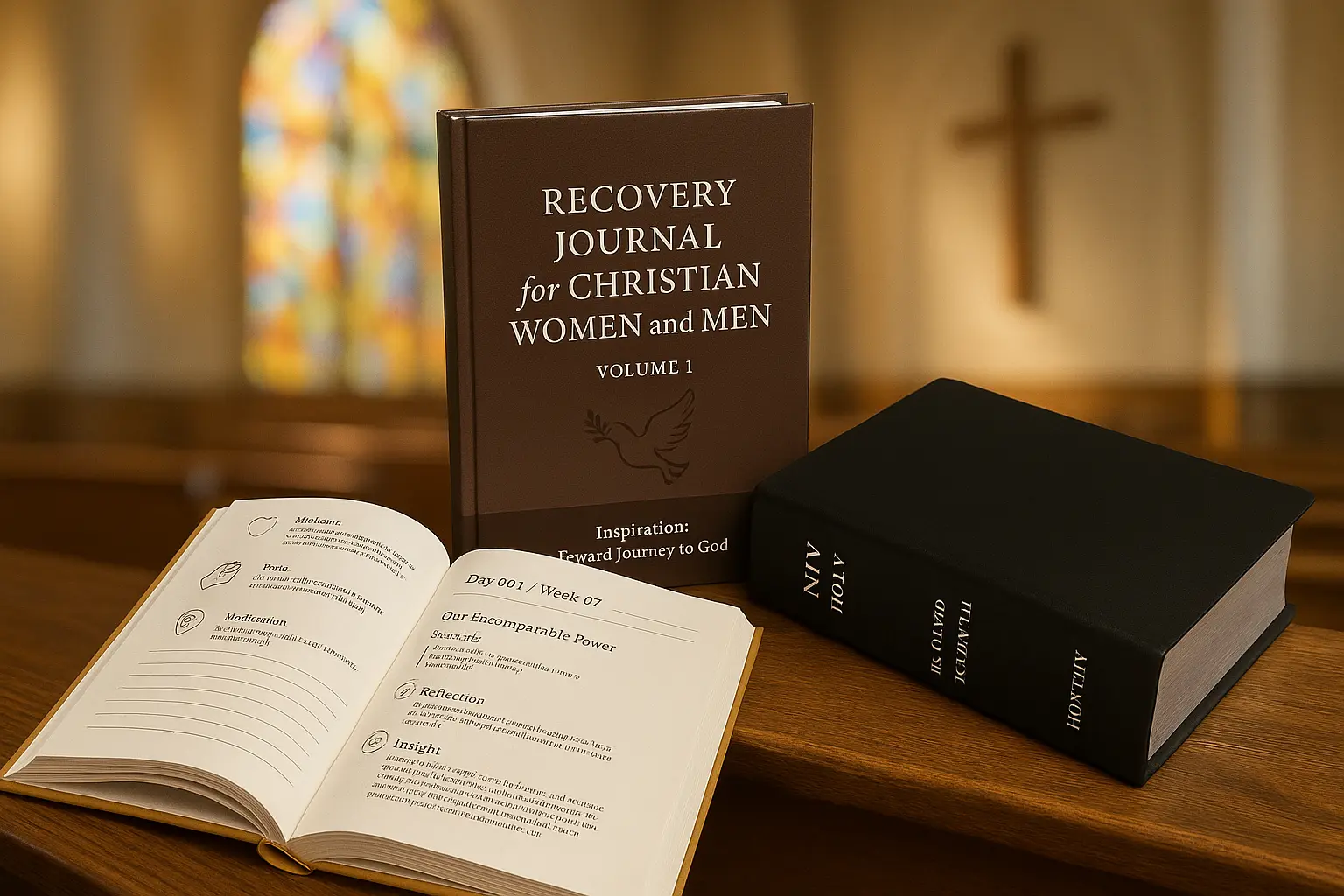
I created the Recovery Journal for Christian Women and Men with a different mindset. It began as something I wrote for my wife after our catastrophic loss, because the material available seemed full of comforting platitudes yet offered remarkably little help in actually facing and processing what had happened.
This journal definitely does not ask you to pretend that everything is all right. It knows it isn't! It does not require automatic agreement, artificial optimism, or the denial of thoughts and feelings that are uncomfortable or even spiritually troubling. The journal faces with you what is honestly there, and then, how to work with that reality.
I used Scripture to provide the foundational structure for that work. Biblical passages are not decorations placed above empty pages, but form the basis of the Reflection, Insight, Gratitude, Prayer, and Realization sections that follow. Together, they lead you through a deliberate process:
- acknowledging your pain
- facing anger and confusion
- learning to place your suffering in Christ's presence and love
- breaking through the isolation grief creates, and
- finding your way back towards other people and everyday life.
That is the difference: I did not create a notebook with Christian decorations. I created a Scripture-led method for facing grief honestly before God.
If you want to know more about how and why the Recovery Journal was created, you can read the story behind the journal.
A Structured Journey Without Pressure
The Recovery Journal has a sequence, not a schedule. The distinction matters because those stricken with grief are already carrying enough of a burden without being handed yet another problem that makes them feel behind, inadequate, or somehow guilty for missing even a single day. This journal gives you a path to follow, but it lets you tread that path at your own pace; it does not stand over you with a stopwatch.
When you first read the journal, it may look to you like one entry a day, but that would be inaccurate as I did not build it that way. I designed the journal to take as long as it takes. Some entries will come easily. Others will need silence, prayer, hesitation, return, and more time than you expected. Those who take longer are not failing at anything. Grief recovery is not a race! The journal's design is simply how it takes grief seriously.
The "secret" to the structure is that it never leaves you abandoned on a page. The lack of a rigid schedule exists so you aren't punished for being human. You can - and should - pause, return, repeat, sit with a difficult section, or simply wait until you are ready to continue.
So, here's the most important takeaway for you: this journal does not contain even the infrastructure for "skipping." There are no missed days, period.
If you purchase the journal, your aim must never be to complete the journal "on time" because I did not write it with "on time" in mind. The aim is to let the journal help you face your grief honestly, bring it before God, and keep moving through the work at the pace your sorrow actually requires.

A Sincere Prayer for Your Recovery
Whether or not you choose to purchase the journal or simply use the many free resources on this website, I pray that the Father will make you whole again, and that His comfort will be a sufficient balm for your soul.
In the name of our Lord Jesus Christ, Amen.