
Isaiah 43:2 — When You Are in the Middle of It
With Faith in Him, You WILL Pass Through the Waters!
"When you pass through the waters, I will be with you; and when you pass through the rivers, they will not sweep over you. When you walk through the fire, you will not be burned; the flames will not set you ablaze." — Isaiah 43:2 (NIV)
Reflection
There is a particular kind of pain that comes not from the beginning of grief but from the middle of it. The beginning has its own terrible clarity. The middle has none. You are still in it. The water is still high. The heat is still real. And no one can tell you how long the crossing takes.
Isaiah 43:2 does not speak to people standing on dry ground looking back. It speaks to people still in the water. Still in the fire. God does not say the rivers will not come. He does not say the flames will not burn near you. He says He will be there when they do. That is a different promise, and it is an honest one.
Grief knows what false comfort sounds like. It has heard enough of it. This verse offers none. It names the danger directly: waters, rivers, fire, flames. It does not pretend the crossing is easy. It says the crossing will not destroy you, and that you will not make it alone.
Start with the free sample
No email. No signup.
That matters when you have been told to feel better by now. When the people around you have moved on but you have not. When you cannot see the far bank and you are tired of standing in the current. The promise here is not that the water will drop at your request. It is that God is present in the water with you, and that the water does not have the final word.
He does not promise the absence of suffering. He promises the presence of God inside it. That is not a small thing. For the person in the middle of the crossing, it may be the only thing that holds.
You are not being swept away. You are being brought through.
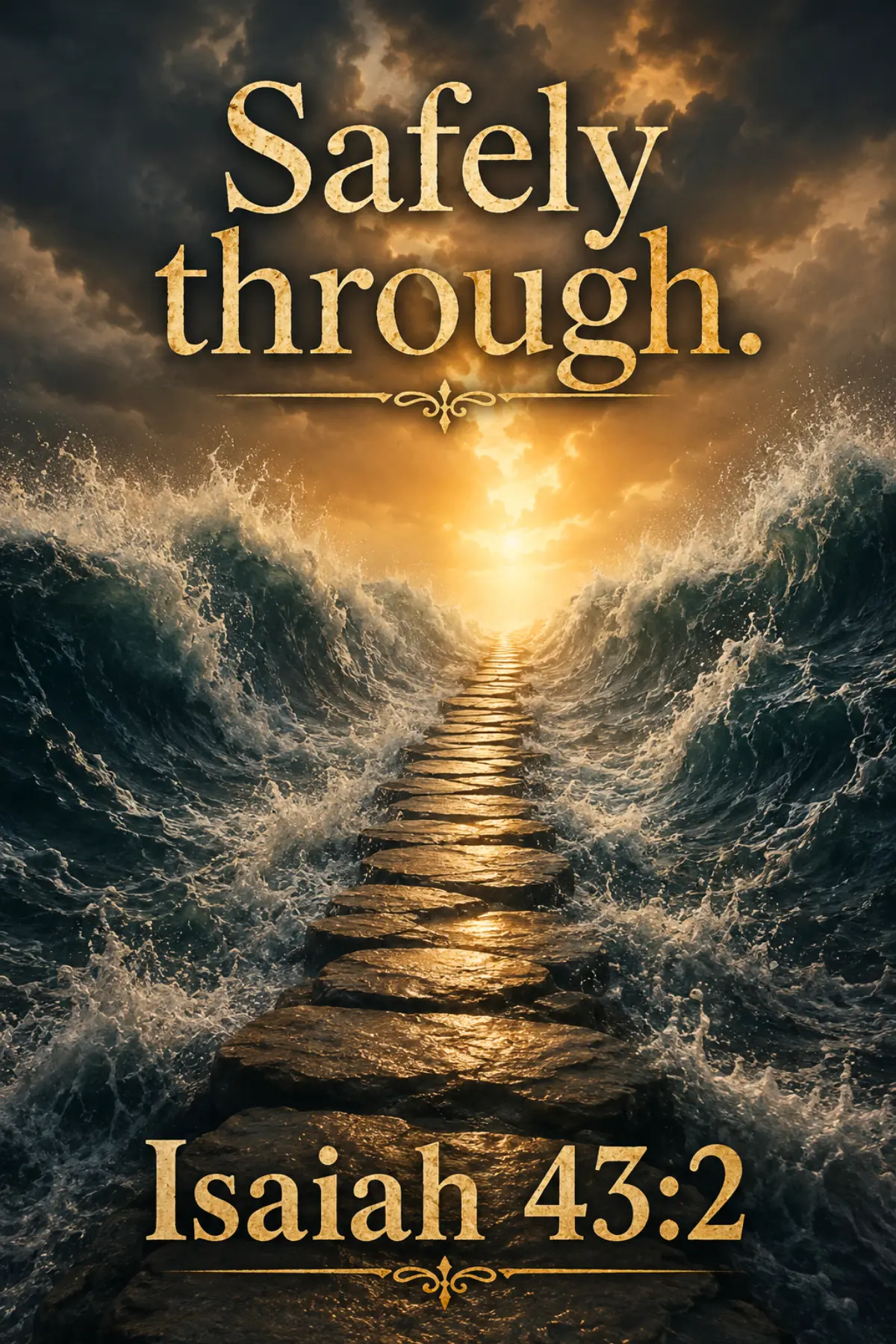
The stone path runs through water that is high on both sides. The current is visible. The spray is real. But the stones are still there, still lit, still solid underfoot. Warm light waits ahead. This is not a safe scene, but it is not a fatal one. For the grieving heart, that image holds something true: the danger around you does not cancel the ground beneath you. The path continues. The light ahead is not imagined. You have not been left to cross blind, and the current pressing hard on both sides is not the same as being swallowed.
Biblical Insight
Isaiah 43 opens with God speaking directly to Israel in exile. The people had been taken from their land, their structures broken, their future uncertain. God does not open this passage by explaining why. He opens it with identity: "I have summoned you by name; you are mine" (Isaiah 43:1). The promise in verse 2 flows from that foundation. Before God tells Israel they will pass through water and fire, He tells them who they are to Him.
The images of water and fire are not decorative. In the ancient world they carried the weight of flood, of military defeat, of total destruction. God is saying: even those things will not end you. The rivers will not sweep over you. The flames will not set you ablaze. These are covenant words, spoken to a people who had lost almost everything.
This verse does not promise that God will prevent suffering. Israel was already in exile when these words were spoken. The water was already high. What the verse promises is that God's presence goes into the danger with His people, and that the danger will not be permitted to become annihilation. There is a difference between passing through fire and being consumed by it. God names that difference here.
For a grieving Christian, this matters because grief can feel total. It can feel like the water is winning, like the heat is increasing, like there is no other side. Isaiah 43:2 does not offer a timeline. It does not tell you how long the crossing takes or how deep the water gets. It tells you that God is in it with you, and that you are not the kind of person who gets swept away. Not because you are strong. Because He is present, and He has said so.
The verse also does not promise that the crossing will feel easy or that God's presence will be obvious while you are in the middle of it. Faith in a promise is not the same as feeling it fulfilled. Israel crossed on the word of God before they saw the other side. That is the nature of trust in the hardest passages.
In Application
- When grief makes you feel submerged, return to the specific language of this verse: not swept over, not burned, not set ablaze. These are precise promises. Hold them against the fear that the current is too strong.
- Do not demand that God remove the trial before you will trust His presence inside it. The promise here is not rescue from the water. It is companionship through it.
- Notice where you are looking: at the height of the water, or at the ground beneath your feet and the light ahead. Both are real. One of them is where the path lies.
- Speak the verse aloud when the fear rises. Not as a performance, but as a reminder of what God has already said. He named you. He claimed you. He goes in with you.
Practical Journaling
Reflect on Isaiah 43:2, then write honestly:
- Where do I feel most submerged right now: what does the high water represent in my life at this moment?
- What would it mean, practically, to believe that God is present with me in this specific passage, not waiting on the far bank?
- Where has grief told me that the current is winning? What does this verse say directly to that fear?
- Is there one next step on the stone path that I can see, even if I cannot see the whole crossing? What is it?

Follow on Medium for More Studies
If writing feels too heavy today, read the verse slowly once and let the words "I will be with you" stand without explanation.
The Faith Recovery Journal explores this and many similar topics for Christians facing grief, loss, and recovery.