
Nehemiah 8:10 — When Joy Has to Become Strength
When Joy Has to Become Strength
"Nehemiah said, 'Go and enjoy choice food and sweet drinks, and send some to those who have nothing prepared. This day is holy to our Lord. Do not grieve, for the joy of the LORD is your strength.'" — Nehemiah 8:10 (NIV)
Reflection
There are days when joy sounds impossible. Not because you have rejected God, but because grief has taken the colour out of ordinary things. Food loses its taste. Morning light feels too bright. Scripture may still be open in front of you, but your eyes keep falling on the page through tears.
The image is simple: a tear-stained Bible page, a cup of water, a small piece of bread, and bright morning light. Nothing dramatic. Nothing triumphant. Just the bare signs of a person still here, still reading, still needing strength for the next few hours. That is often where grief recovery begins: not with emotional victory, but with enough mercy to receive water, bread, light, and the word of God.
Nehemiah 8:10 does not tell wounded people to fake happiness. It speaks to people who were weeping as they heard the Law read. Their grief was real. Their conviction was real. Yet Nehemiah told them not to remain collapsed under sorrow that day, because the day was holy to the Lord. Joy was not decoration. Joy was strength.
Start with the free sample
No email. No signup.
That matters when grief has made you suspicious of joy. A laugh can feel disloyal. A meal can feel wrong. A quiet morning can feel like betrayal because someone you love is not there to share it. The grieving heart can begin to treat every small comfort as if it must be refused to prove that love was real.
But Scripture does not command you to starve your soul in order to honour your loss. There is a kind of joy that does not deny sorrow. It stands beside sorrow and gives you enough strength to keep breathing, keep praying, keep eating, keep washing your face, keep opening the Bible, and keep doing the next necessary thing before God.
Joy can strengthen you without erasing your grief.
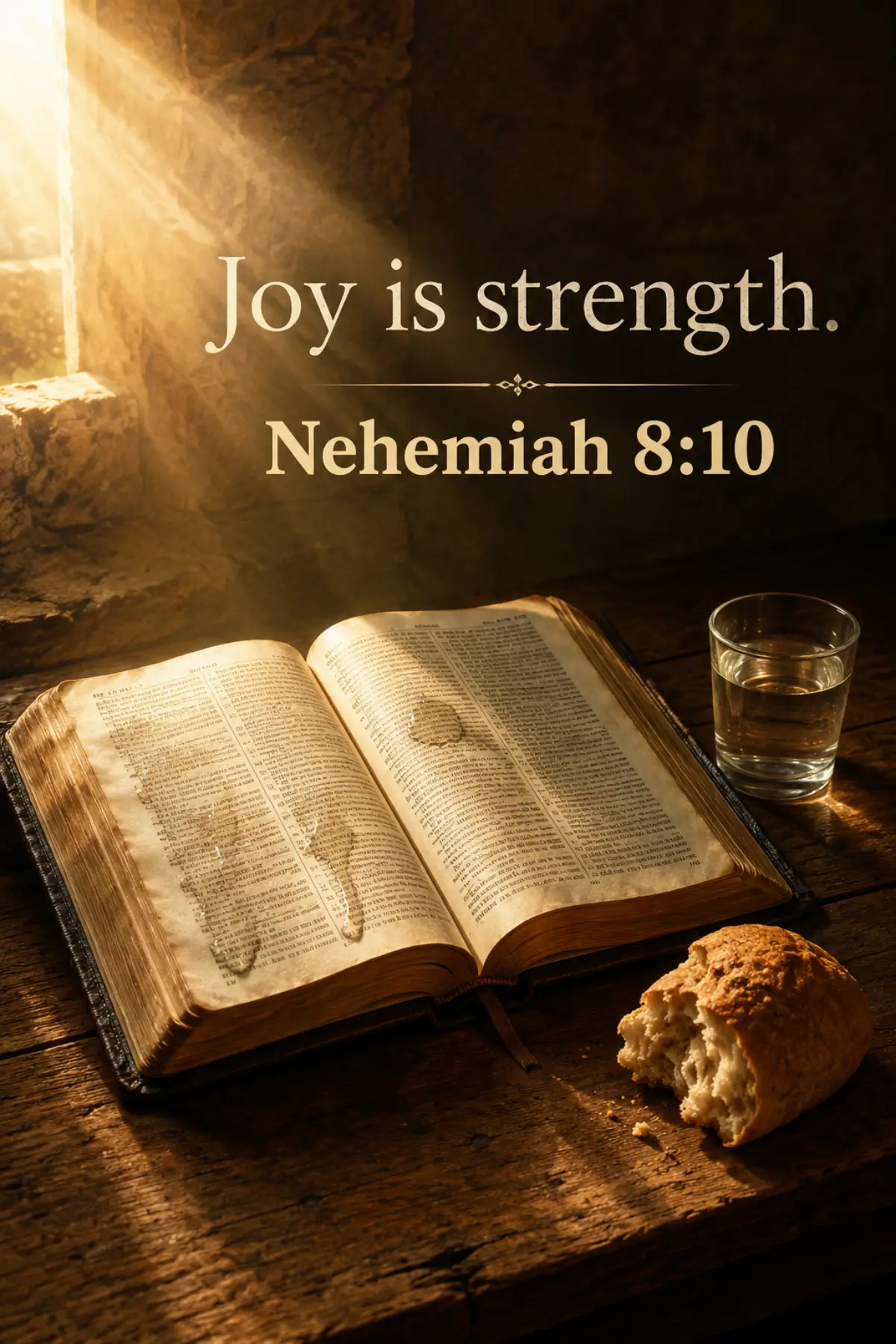
The tear-stained Bible page keeps the sorrow visible. The bread and water keep the body in view. The morning light does not pretend the night never happened; it simply enters the room anyway. This is the kind of joy Nehemiah points toward: not loud, not careless, not detached from pain, but holy strength given in the middle of need. For someone grieving, that small table can become a place where God’s word, daily provision, and quiet light meet the exhausted heart.
Biblical Insight
Nehemiah 8 takes place after the people of Israel had returned from exile and gathered to hear the Book of the Law read aloud. Ezra read from morning until midday, and the Levites helped the people understand what was being read. As the people understood the Law, they began to weep.
Their tears were not meaningless. They heard God’s word and recognised the seriousness of sin, failure, loss, and covenant unfaithfulness. Scripture had exposed them. Their grief was a response to truth. Nehemiah did not mock their tears or treat conviction as weakness. But he did direct them away from remaining in grief on that holy day.
His instruction was practical and communal: eat choice food, drink sweet drinks, and send portions to those who had nothing prepared. The joy of the Lord was not private emotional escape. It included worship, nourishment, generosity, and shared provision. God’s holiness did not call them into despair. It called them to receive mercy with their bodies, their tables, and their community.
“The joy of the LORD is your strength” does not mean Christians must always feel cheerful. It does not mean grief is sinful. It does not mean tears dishonour God. The same Bible contains lament, mourning, anguish, and honest cries from the depths. Nehemiah 8:10 is not a command to suppress pain.
It also does not promise that joy will instantly change your circumstances. The people still had a hard history. They still had rebuilding to do. They still lived with consequences, vulnerability, and the long work of obedience. Joy did not remove every burden. It gave them strength to stand before God without being destroyed by sorrow.
For a grieving or struggling Christian, this verse matters because grief can drain the strength needed for ordinary obedience. It can make eating feel like labour, prayer feel distant, Scripture feel heavy, and human connection feel exhausting. Nehemiah 8:10 reminds the believer that God’s joy is not shallow pleasure. It is a strength rooted in who the Lord is: merciful, holy, present, and able to sustain His people when their own strength fails.
This joy may come quietly. It may look like finishing a small meal. It may look like reading one verse through tears. It may look like accepting help. It may look like stepping into morning light after a night of dread. It may look like sending a portion to someone else even while your own heart aches. The point is not performance. The point is receiving strength from the Lord instead of treating grief as the only truth in the room.
In Application
- Do not treat every small comfort as betrayal; receive what God gives without pretending the pain is gone.
- Care for your body today with one simple act: water, food, rest, washing, or fresh air.
- Let Scripture meet you honestly, even if the page becomes tear-stained.
- Look for one practical way to share mercy with someone else without denying your own need.
Practical Journaling
Reflect on Nehemiah 8:10, then write honestly:
- Where has grief made joy feel wrong, unsafe, or disloyal?
- What small provision has God placed near me today: water, bread, light, Scripture, a person, or a moment of quiet?
- What sorrow do I need to bring before the Lord without letting it become the only voice I obey?
- What would it look like to receive joy as strength, not as a demand to stop grieving?
If writing feels too heavy today, drink some water, read the verse once, and ask the Lord for enough strength for this day.
The Faith Recovery Journal explores this and many similar topics.