
Psalm 46:10 — When Stillness Feels Like Surrendering the Fight
When Stillness Feels Like Surrendering the Fight
"Be still, and know that I am God; I will be exalted among the nations, I will be exalted in the earth." — Psalm 46:10 (NIV)
Reflection
Stillness can feel unbearable when grief has trained your body to stay alert.
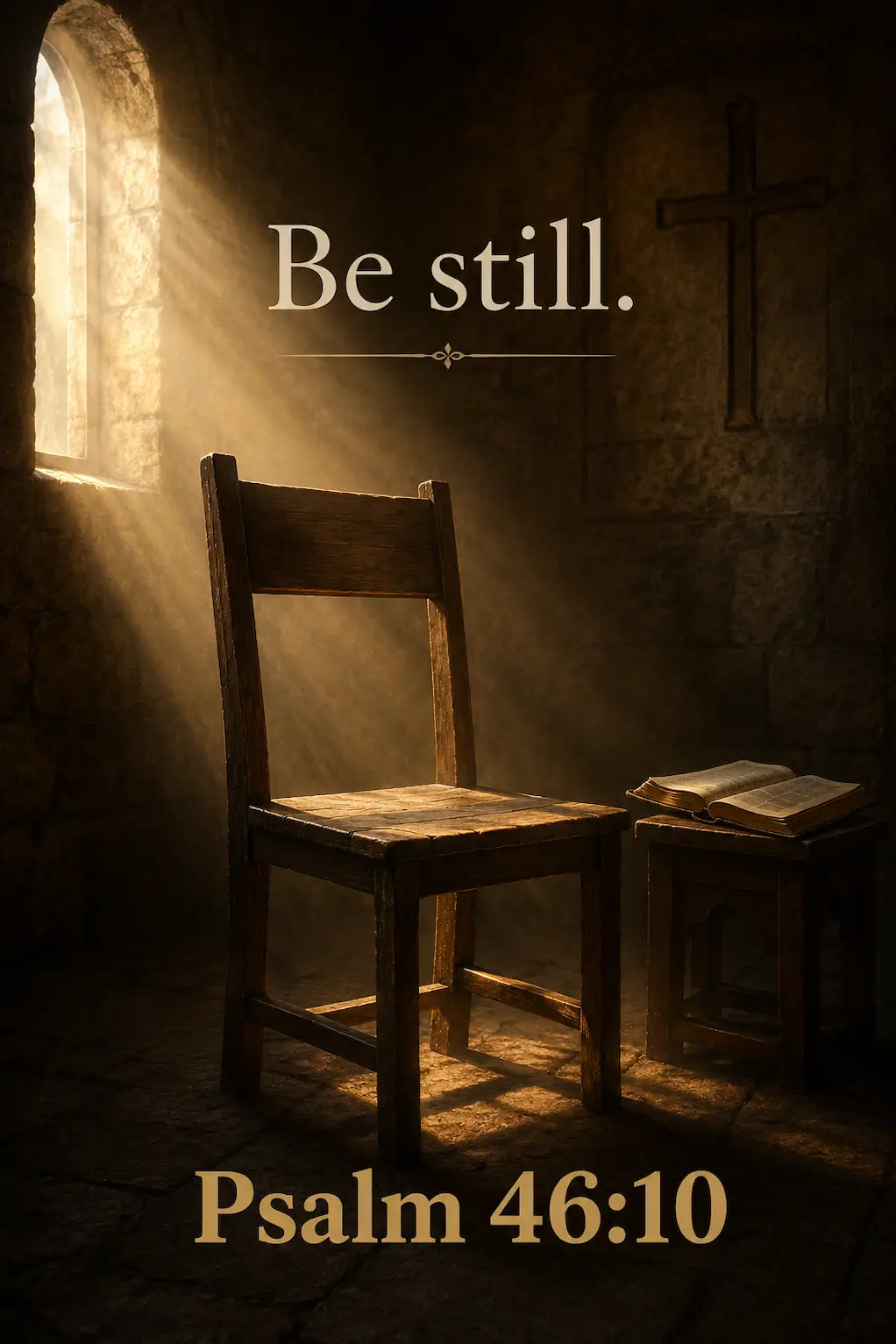
You sit in the chair, but your mind keeps moving. You open the Bible, but your thoughts keep circling the same wound. You want peace, but silence only makes the absence louder. The empty chair holds more than quiet. It holds the person missing from the room, the prayer that did not end the way you begged it to, and the life that now feels strangely unfamiliar.
That is why “Be still” can sound impossible. Not because you reject God, but because stopping feels dangerous. Movement gives the illusion of control. Thinking, checking, replaying, planning, regretting, bracing — all of it can feel like survival. Stillness asks you to stop grasping for the steering wheel when your hands are already exhausted.
Start with the free sample
No email. No signup.
The open Bible in the morning light matters. God is not calling you into empty silence. He is calling you into stillness before Him. The chair is empty, but the Word is open. The room may feel changed beyond recognition, but God has not become less God because grief has made your world feel unstable.
Stillness is not defeat before God.
It is the refusal to let panic become your lord. It is the hard, quiet act of bringing your trembling self into the presence of the One who does not tremble. You do not need to feel calm before you obey this verse. Sometimes the first act of stillness is simply sitting before the Lord with nothing impressive to say.
Biblical Insight
Psalm 46 is not a gentle poem written for comfortable people. It speaks about trouble, roaring waters, shaking mountains, raging nations, tottering kingdoms, and war. The psalm does not deny chaos. It names it.
The opening line says, “God is our refuge and strength, a very present help in trouble.” That matters. Psalm 46:10 comes after the psalm has already faced upheaval. “Be still” is not a command to pretend nothing is wrong. It is not a sentimental instruction to relax. It is a divine command spoken into fear, conflict, instability, and human striving.
In context, “Be still” carries the force of stopping. Cease striving. Stop frantic resistance. Stop acting as though the whole world rests on human control. God declares His own supremacy: “I am God.” He will be exalted among the nations. He will be exalted in the earth.
For someone grieving, this verse does not promise immediate emotional ease. It does not say the chair will stop feeling empty. It does not say the room will stop hurting. It does not say your body will instantly settle or that the questions will disappear. It does not ask you to call devastation peaceful.
It does something stronger.
It puts God back in the centre when grief has made pain feel central. It reminds you that the Lord is not one more fragile thing in a fragile world. He is God when the earth gives way. He is God when nations rage. He is God when your private world collapses and no one else sees how much strength it takes to get through the morning.
The second half of the verse matters as much as the first. “I will be exalted among the nations, I will be exalted in the earth.” God does not ground stillness in your ability to understand. He grounds it in His own unchallenged rule. Your stillness is not based on the situation becoming manageable. It is based on God remaining God.
That distinction matters. Many grieving Christians feel pressure to become peaceful quickly, as though distress proves weak faith. Psalm 46 does not support that kind of shallow reading. The psalm includes noise, shaking, threat, and war. Yet within all that, God commands stillness because He is present, sovereign, and sufficient.
Stillness does not mean passivity in every practical matter. You may still make calls, handle responsibilities, attend appointments, sort documents, care for children, manage bills, and do what needs doing. Biblical stillness is not laziness. It is the inner refusal to enthrone fear.
The empty chair and open Bible give the verse a physical shape. Sit down. Let the light fall where it falls. Do not rush to fill the silence with explanations. Let the Word remain open even when your heart feels closed. Know that He is God, not because the pain has lifted, but because He has spoken.
In Application
- Sit before God without performing strength. Let your body be still even if your emotions are not.
- Name the frantic action you keep using to avoid silence: checking, replaying, arguing, planning, or imagining every possible outcome.
- Read Psalm 46 slowly before trying to explain your grief. Let the psalm’s view of God confront the size of your fear.
- Treat stillness as obedience, not a mood. You do not have to feel peaceful before you stop striving.
Practical Journaling
Reflect on Psalm 46:10, then write honestly:
- What does the empty chair represent for me today — absence, fear, unfinished words, loneliness, or something else?
- What do I keep doing because stillness makes the pain feel too loud?
- Where have I allowed panic, grief, or responsibility to act as though it is god over me?
- If I sat with an open Bible in the morning light, what would it mean today to know that He is God?
If writing feels too heavy today, sit quietly and pray: “Lord, help me be still before You.”
The Faith Recovery Journal explores this and many similar topics.