
Psalm 38:17 — You Feel Like You're About to Fall
The Edge is So Close!
"For I am about to fall, and my pain is ever with me."
— Psalm 38:17 (NIV)
Reflection
There are moments when pain brings you right to the edge. Not in a dramatic way other people can easily see. You may still answer messages, make food, go to work, sit in church, or speak politely. But inwardly you know how close the edge is. One more demand, one more memory, one more pressure, one more unanswered prayer, and you feel as if you may not stay upright.
This is not the language of someone exaggerating for effect. It is the language of someone who knows their own instability. Pain has become constant. The fall feels near. The psalmist does not hide that from God. He says it plainly.
Start with the free sample
No email. No signup.
Grief can make you feel exactly like that glass: still standing, but no longer safely centred. The pain is not an occasional visitor. It is “ever with me.” It follows into sleep, wakes with you, sits beside you at meals, walks into rooms with you, and waits inside ordinary tasks. That kind of pain wears away confidence.
Psalm 38:17 matters because it gives honest words before the fall happens. You do not have to wait until everything shatters to tell God you are close to the edge. You can speak from the tilted place. You can say, “I am about to fall.” That is not weakness dressed up as drama. It is truthful prayer.
God can hear you before the glass hits the floor.
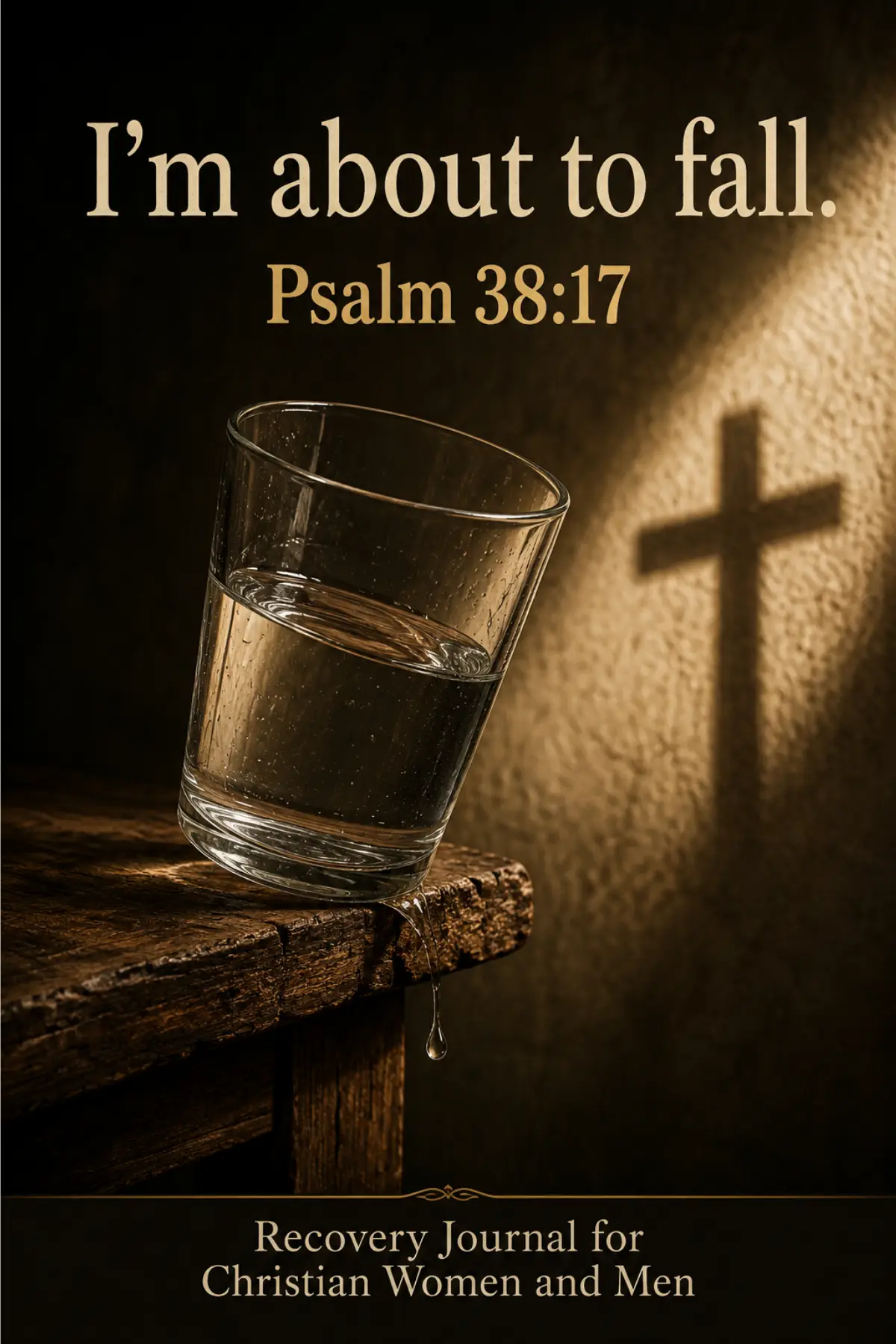
The glass has not yet broken, but the danger is already visible. The falling drop shows that pressure has begun to spill over. The small wooden cross shadow behind it keeps the scene under the sign of Christ’s suffering and mercy, not mere panic. For someone grieving, afraid, or near collapse, the image says this: the Lord is not waiting for you to shatter before your pain counts. The tilted moment matters too.
Biblical Insight
Psalm 38 is one of David’s psalms of deep distress. It contains physical suffering, spiritual anguish, guilt, isolation, weakness, and fear of enemies. David speaks of wounds, pain, failing strength, troubled heart, mourning, loneliness, and the sense that his suffering is constantly before him. This is not a neat psalm. It is a prayer from pressure.
Psalm 38:17 comes near the end of the psalm, where David says, “For I am about to fall, and my pain is ever with me.” The statement is direct. He does not present himself as stable, impressive, or spiritually composed. He tells the Lord he is near collapse. His pain is not brief or easily dismissed. It is constant enough to shape his whole sense of himself.
The verse matters because Scripture does not require suffering people to pretend they are steadier than they are. There is a place in prayer for admitting instability. A believer can say, “I am about to fall,” without that confession becoming unbelief. In fact, bringing that confession to God may be an act of faith. It turns the dangerous moment toward the Lord instead of hiding it in silence.
Psalm 38 also shows that pain can be complex. David’s distress includes sin, discipline, physical suffering, relational abandonment, and opposition. Not every grieving person should read their suffering as personal punishment. Scripture gives many causes and categories for pain. But this psalm is still useful because it shows how honestly a believer can speak when suffering has become heavy, prolonged, and morally searching.
This verse does not promise that the feeling of falling will disappear immediately. It does not promise instant relief from chronic pain, grief, fear, depression, exhaustion, or spiritual heaviness. It does not say that prayer makes the glass instantly upright. The psalm itself continues through distress before reaching its final cry: “Lord, do not forsake me; do not be far from me, my God. Come quickly to help me, my Lord and my Saviour.”
That ending matters. David’s near-fall does not end in self-reliance. It ends in appeal. He asks God not to be far. He asks for quick help. The believer who is about to fall needs more than analysis. He needs the nearness and help of the Lord.
For a grieving or struggling Christian, Psalm 38:17 matters because grief often creates private edge-moments. Other people may not know how near you feel to breaking. They may only see you functioning. But the Lord receives the deeper truth. You may need to say it plainly in prayer, and you may also need to tell a safe person. “I am about to fall” is too serious to bury under politeness.
The verse also challenges the habit of waiting too long. Many Christians try to pray only after they have regained control. Psalm 38 invites the opposite. Pray while tilted. Pray while the drop is already falling. Pray while pain is still with you. The Lord is not honoured by your pretending the edge is farther away than it is.
In Application
- Tell God plainly where you feel close to falling instead of softening the truth to sound more composed.
- Do not wait for collapse before asking for help from a safe person, pastor, counsellor, doctor, or trusted friend.
- Name the pain that is “ever with me” so it does not remain a vague, unspoken pressure.
- Take one stabilising step today: rest, prayer, food, water, confession, a phone call, or stepping back from one unnecessary demand.
Practical Journaling
Reflect on Psalm 38:17, then write honestly:
- Where do I feel most like the tilted glass: still standing, but dangerously close to the edge?
- What pain has been “ever with me” lately, following me into ordinary life?
- What signs have I been ignoring that show I need help before I fall?
- What would I ask the Lord for today if I stopped pretending I was more stable than I am?
If writing feels too heavy today, pray, “Lord, I am about to fall; come quickly to help me.”
The Faith Recovery Journal explores this and many similar topics for Christians facing grief, loss, and recovery.