
James 5:16 — When Truth Is Finally Spoken Aloud
A Truthful Fellowship is Powerful
"Therefore confess your sins to each other and pray for each other so that you may be healed. The prayer of a righteous person is powerful and effective." — James 5:16 (NIV)
Reflection
Grief can make silence feel safer than truth. You may sit with guilt, anger, resentment, fear, or shame and tell yourself it is better not to say anything. Better not to burden anyone. Better not to expose what grief has stirred up. Better not to admit the thoughts that feel too dark, too bitter, too confused, or too ugly to bring into the open.
James 5:16 does not treat confession as humiliation. It treats confession, prayer, and healing as connected gifts within the life of God’s people. The verse does not call the wounded believer to perform public exposure. It calls for truth spoken in the right place, with the right people, before the Lord.
Start with the free sample
No email. No signup.
That matters when grief has made you feel spiritually unsafe. You may be afraid that honesty will change how people see you. You may fear that confessing anger toward God, jealousy toward others, bitterness toward family, numbness in prayer, or sin that has worsened under pressure will make you appear faithless. So you keep the chair empty. You keep the truth inside. You pray around the wound instead of naming it.
But hidden things do not become harmless because they stay hidden. Shame grows in silence. Sin grows in secrecy. Grief becomes more dangerous when it has no truthful witness. James does not give you permission to be careless with your pain, but he does call you away from lonely concealment.
Healing often begins where concealment ends.
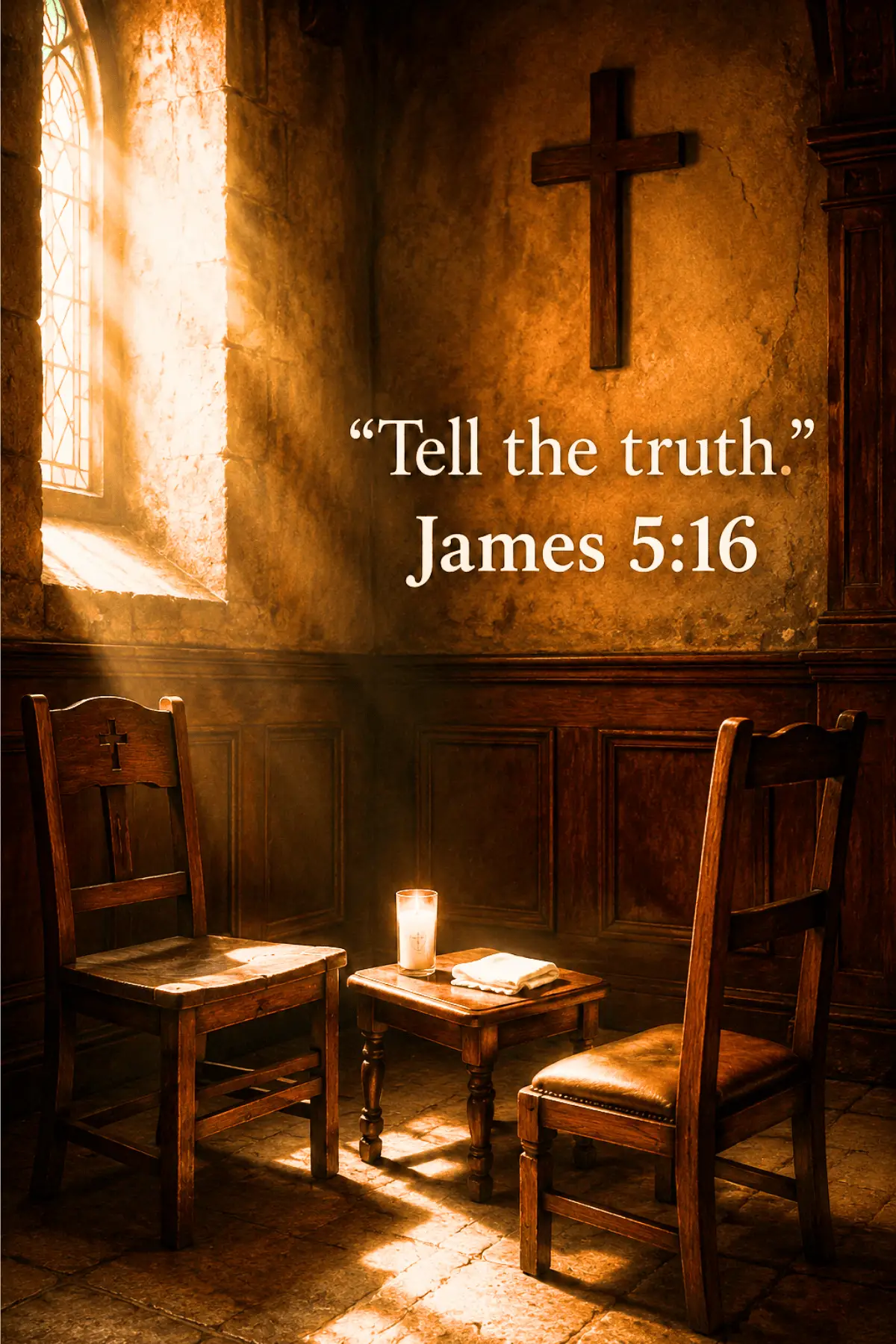
The empty chairs face each other in a sacred corner, leaving space for the courage it takes to tell the truth. The prayer candle keeps the moment before God. The folded handkerchief suggests tears that may come, but it does not force them. The chair pulled slightly back carries the feeling of confession just spoken: not neat, not easy, but no longer buried. For the grieving heart, this scene says that truth can be brought into the light without being turned into theatre.
Biblical Insight
James 5:16 sits in a passage about suffering, sickness, prayer, confession, forgiveness, and restoration. James has just instructed the sick to call the elders of the church, to be prayed over, and to be anointed in the name of the Lord. He then widens the focus to mutual confession and mutual prayer among believers.
The verse begins with “Therefore,” connecting confession and prayer to the healing work already described. James is not presenting confession as a religious performance. He is showing that Christian life should not be lived in sealed compartments. Sickness, sin, weakness, prayer, forgiveness, and healing all belong before God. They also belong, wisely and carefully, within the care of faithful believers.
“Confess your sins to each other” does not mean every private struggle must be announced to everyone. Scripture does not command reckless exposure. It does not require a grieving person to hand sensitive pain to unsafe people, gossiping people, manipulative people, or spiritually immature people. The “each other” of Christian confession assumes a community where truth can be met with prayer, humility, and care.
This verse also does not mean that every illness, grief, or emotional wound is caused by personal sin. James does not give permission for cruel assumptions. A suffering person does not need accusations disguised as discernment. There are times when confession is needed because sin is present. There are also times when what is needed is lament, prayer, care, and endurance.
At the same time, grief can expose sin that was already there or create pressure under which new sin grows. Anger can harden into contempt. Pain can turn into envy. Isolation can become self-protection that refuses love. Numbness can drift into neglect of God. Fear can lead to control. Confession matters because the grieving believer is still a whole person before God, not merely a wound.
James says that the prayer of a righteous person is powerful and effective. This does not mean the person praying has sinless perfection. In Scripture, righteousness belongs to a life rightly turned toward God. The strength of prayer does not come from performance, volume, emotional pressure, or spiritual theatre. It comes from God, who hears His people and works through faithful prayer.
For a grieving or struggling Christian, James 5:16 matters because pain often teaches people to hide. You may hide what you did. You may hide what you feel. You may hide what you fear. You may hide the fact that you are not coping. This verse calls you toward truthful fellowship: confession where needed, prayer where needed, and healing that begins under the care of Christ rather than under the rule of shame.
In Application
- Choose carefully who hears your confession; wisdom matters as much as honesty.
- Name the difference between grief itself and sin that grief has exposed or intensified.
- Ask one trusted believer to pray with you about what you have been carrying alone.
- Do not confuse secrecy with safety when secrecy is keeping shame, bitterness, or fear in control.
Practical Journaling
Reflect on James 5:16, then write honestly:
- What truth have I been afraid to say aloud because grief has made it feel shameful?
- Is there any sin, bitterness, envy, anger, fear, or concealment that I need to confess before God and, wisely, before another believer?
- Who is safe, mature, prayerful, and trustworthy enough to sit in the other chair?
- What kind of healing am I asking the Lord for: forgiveness, courage, honesty, release, restoration, or strength to stop hiding?

Follow on Medium for More Studies
If writing feels too heavy today, tell the Lord one true sentence you have been avoiding.
The Faith Recovery Journal explores this and many similar topics for Christians facing grief, loss, and recovery.