
1 Chronicles 16:11—Seeking God’s Strength When You Have to Keep Going
Keep Going Back to the Lord
"Look to the Lord and his strength; seek his face always."
— 1 Chronicles 16:11
Reflection
There are days when strength is not a feeling. It is a return. You may wake up already tired, already carrying the same grief, the same duty, the same pressure, the same unfinished work. You may not feel renewed. You may not feel brave. You may only know that you have to keep going back to the Lord because your own supply will not last.
That fits the verse strongly. “Look to the Lord and his strength; seek his face always.” Not once. Not only when you feel spiritual. Not only when the situation first becomes frightening. Always. Again. Repeatedly. Back to His strength when yours is thin. Back to His face when grief has pulled your attention toward fear, duty, resentment, or exhaustion.
Start with the free sample
No email. No signup.
Grief often turns life into work. Even ordinary tasks can feel heavy. You answer messages, sort paperwork, care for family, return to responsibilities, sit through services, face anniversaries, make decisions, and carry memories into rooms where no one else can see them. It can feel as if you are gripping a rope with blistered hands.
1 Chronicles 16:11 does not tell you to pretend your hands are not tired. It directs your eyes and your seeking. Look to the Lord. Look to His strength. Seek His face always. That means the grieving Christian is not asked to become self-powered. The call is repeated dependence.
You are not called to keep going without returning to God.
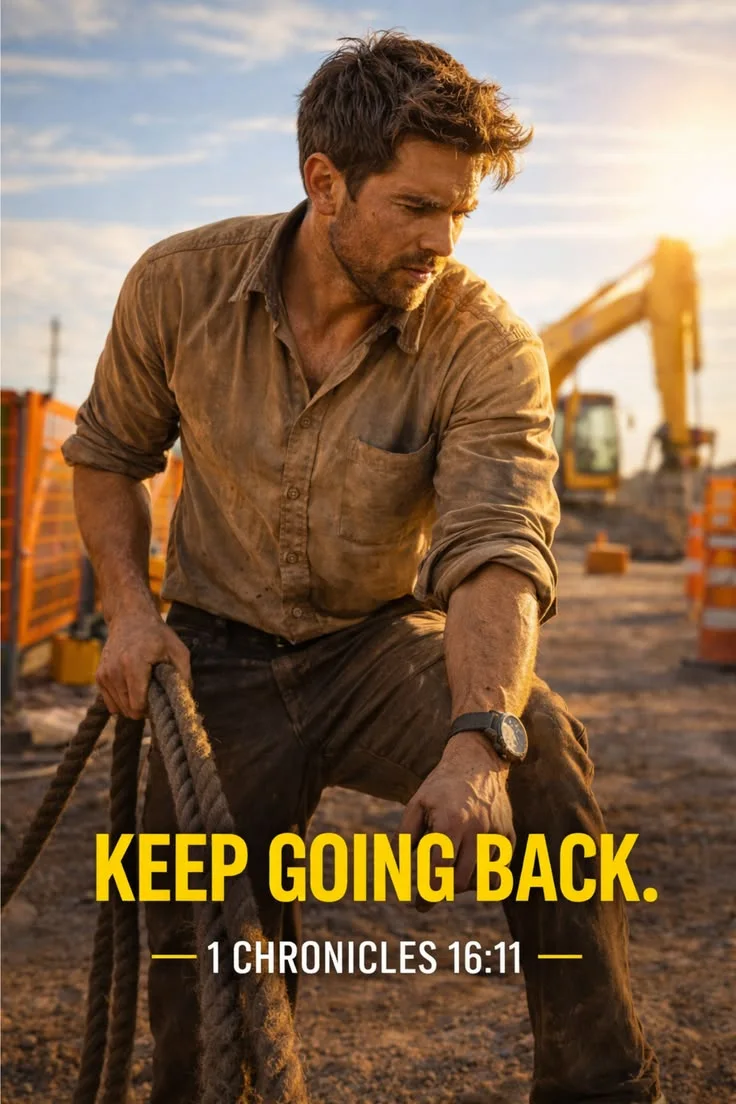
The dusty worker gripping the rope makes the command physical. Strength is not shown as a feeling floating above real life; it is needed in the middle of strain, labour, heat, dirt, pressure, and unfinished work. The sunlight behind him does not remove the effort. It lights the place where effort is still required. For the grieving heart, the message is clear: keep going back to the Lord before the rope burns through your hands.
Biblical Insight
1 Chronicles 16 records a moment of worship after the ark of God was brought to Jerusalem. David appointed Levites to minister before the ark, to give praise, thanks, and worship to the Lord. The song in this chapter calls God’s people to give thanks, call on His name, make known His deeds, sing to Him, remember His wonders, and seek Him continually.
Verse 11 says, “Look to the Lord and his strength; seek his face always.” This is worship language, but it is not detached from life. Israel’s history had included fear, battle, wandering, failure, deliverance, covenant mercy, and repeated need. The command to seek the Lord’s strength comes to a people who must remember that their life depends on Him.
“Look to the Lord” is an act of directed attention. It means refusing to let circumstance become the only thing in view. In grief, attention can be captured by absence, fear, regret, practical burden, or dread of what comes next. The verse calls the believer to turn attention deliberately toward the Lord, not as denial, but as reorientation.
“And his strength” matters. The verse does not say, “Look inside yourself and find enough.” It points outside the believer to God’s strength. That is critical for a grieving Christian because sorrow can expose the limits of personal endurance. You may be responsible, disciplined, capable, and still not have enough strength for what loss has placed on you. God’s strength is not a decorative idea. It is what the weak and burdened must seek.
“Seek his face always” deepens the command. Seeking God’s face is not merely asking for resources while avoiding God Himself. It is relational. It means seeking His presence, His favour, His attention, His nearness, and His will. The verse calls for repeated return to God, not occasional religious contact when pressure becomes unbearable.
This does not promise that every burden will become light immediately. It does not promise that the work will stop, the grief will vanish, or the responsibilities will become easy. The worker in the scene is still gripping the rope. The ground is still dusty. The day is still demanding. Seeking God’s strength does not always remove the task. It sustains the person who must face it.
It also does not mean exhaustion should be ignored. Seeking the Lord’s strength is not a command to abuse the body, refuse rest, or call burnout faithfulness. God’s strength may meet you through prayer, sleep, food, wise limits, help from others, Scripture, silence, or one honest confession that you cannot keep pulling alone.
For a grieving or struggling Christian, 1 Chronicles 16:11 matters because grief often becomes a long obedience under weight. You may need strength not for one dramatic moment, but for repeated ordinary returns: back to prayer, back to truth, back to church, back to work, back to necessary care, back to the Lord’s face when your own face is tired and drawn.
In Application
- Identify where you are trying to keep going on your own strength and name it before God.
- Return to the Lord before you reach collapse; repeated seeking is not weakness, but obedience.
- Ask for strength for the specific burden in your hands today, not vague strength for everything.
- Let seeking God’s face include rest, Scripture, prayer, help, and wise limits rather than mere forced effort.
Practical Journaling
Reflect on 1 Chronicles 16:11, then write honestly:
- What rope am I gripping right now: grief, duty, care, work, family pressure, fear, or unfinished responsibility?
- Where have I been trying to keep going without looking to the Lord’s strength?
- What does “seek his face always” look like in a normal day when I am tired?
- What is one practical way I can go back to God today before exhaustion turns into resentment or collapse?

Follow on Medium for More Studies
If writing feels too heavy today, pray, “Lord, I am tired; teach me to keep going back to Your strength.”
The Faith Recovery Journal explores this and many similar topics for Christians facing grief, loss, and recovery.