
Psalm 102:1 – Pushing Your Prayer Through Your Grief
I pushed the words through the darkness: "God, hear me!"
"Hear my prayer, Lord ; let my cry for help come to you."
— Psalm 102:1 (NIV)
Reflection
There are prayers that do not sound composed. They come from the floor, from the hallway, from the place where the heart has run out of explanations and only has one plea left: hear me. Not fix everything immediately. Not make me sound strong. Not make this pain small. Just hear me.
Psalm 102:1 gives the grieving believer words for that moment. “Hear my prayer, Lord; let my cry for help come to you.” The verse does not begin with calm reflection. It begins with urgency. The psalmist is not giving a speech about prayer. He is asking God to receive the cry before it falls unheard into the dark.
Start with the free sample
No email. No signup.
Grief can make prayer feel like speaking through a closed door. You may believe God is there and still feel the ache of distance. You may pray and feel no answer. You may send up the same request again and again until even your own words sound worn down. Psalm 102 does not rebuke that need to be heard. It records it.
That matters because many grieving Christians feel pressure to tidy their prayers before bringing them to God. They think a proper prayer must be measured, grateful, doctrinally balanced, and emotionally controlled. But Psalm 102:1 is simpler and more desperate. It gives you permission to ask the Lord to hear the cry itself.
A cry for help is still a prayer.
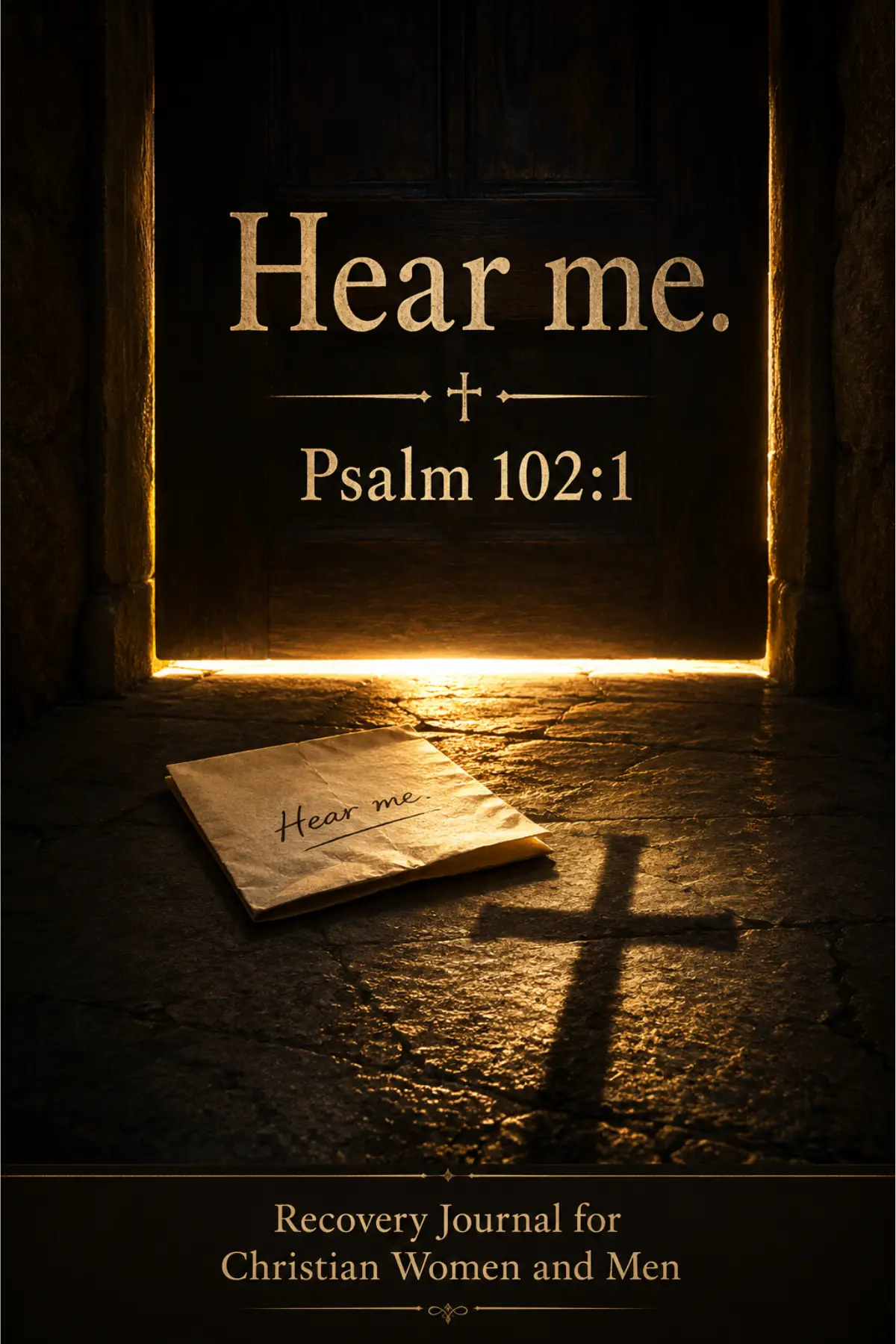
The closed door, the warm light under its edge, and the prayer note on the floor hold the whole emotional weight of the verse. The door shows the ache of waiting. The light says the darkness is not absolute. The note shows a cry pushed forward when the person praying may feel too tired to stand. For someone grieving, afraid, or exhausted, the scene says this: even when prayer feels like a folded note left outside a closed door, the cry can still come before the Lord.
Biblical Insight
Psalm 102 is introduced as “a prayer of an afflicted person who has grown weak and pours out a lament before the Lord.” That heading matters. The psalm is not written from spiritual comfort. It comes from affliction, weakness, and lament. The writer is physically and emotionally distressed, describing days vanishing like smoke, a heart withered like grass, groaning, isolation, tears, and the sense of being under severe pressure.
Psalm 102:1 is therefore not a decorative opening. It is the first desperate movement of a wounded person turning toward God. “Hear my prayer” asks for divine attention. “Let my cry for help come to you” asks that the plea not be blocked, lost, ignored, or left outside. The psalmist is not assuming prayer feels easy. He is asking God to receive it.
This verse matters because Scripture gives serious space to lament. The Bible does not require the suffering believer to speak as if pain is minor. It does not force grief into cheerful language. Psalm 102 shows that weakness, anguish, loneliness, and desperate pleading can belong inside prayer rather than outside faith.
The verse does not promise an instant answer. It does not say the door will open the moment the cry is spoken. The rest of the psalm continues through distress before lifting the eyes toward God’s enduring throne, His compassion, and His care for future generations. That movement is important. Lament may begin in urgent need, but it does not always resolve quickly.
Psalm 102:1 also does not teach that God is reluctant to hear until the sufferer begs hard enough. The plea arises from the psalmist’s experience of distress, not from a defect in God’s character. In grief, silence can feel like rejection. Waiting can feel like distance. The psalm gives language for that experience without turning the feeling into final truth.
For a grieving Christian, this verse matters because loss often strips prayer down to its barest form. You may not know what to ask anymore. You may be too tired to explain. You may not have the strength to say something long, beautiful, or balanced. Psalm 102:1 tells you that “Hear me” can be enough for the moment. It is honest. It is directed toward God. It refuses to let pain become wordless isolation.
The cry also matters because it is addressed to the Lord. Grief can send the heart many places: into silence, bitterness, distraction, numbness, resentment, or private despair. Psalm 102 sends the cry to God. That does not make the pain small. It gives the pain a holy direction.
Christians should also hear this verse through the mercy of Christ. The Lord is not embarrassed by desperate cries. Jesus Himself cried out in anguish. He knows the weight of suffering, abandonment, tears, and urgent prayer. The grieving believer does not need to manufacture calm before coming to Him. The cry may be strained, unfinished, repeated, or written like a note pushed across a dark floor. It can still come before God.
In Application
- Pray the plain cry before you try to explain everything: “Lord, hear me.”
- Do not treat emotional desperation as proof that your prayer is invalid.
- Write one short prayer note if spoken prayer feels impossible today.
- Bring the feeling of a “closed door” honestly to God instead of pretending waiting does not hurt.
Practical Journaling
Reflect on Psalm 102:1, then write honestly:
- What cry for help have I been holding back because it sounds too desperate, repetitive, or raw?
- Where does prayer currently feel like speaking toward a closed door?
- What would I write on one folded prayer note and push toward the Lord today?
- What light, however small, reminds me that the darkness is not the whole truth?
If writing feels too heavy today, whisper only this: “Lord, let my cry come to You.”
The Faith Recovery Journal explores this and many similar topics for Christians facing grief, loss, and recovery.