
Hosea 6:1 — God Will Mend What Is Torn
He will heal.
"Come, let us return to the Lord . He has torn us to pieces but he will heal us; he has injured us but he will bind up our wounds"
— Hosea 6:1 (NIV)
Reflection
Some pain feels torn rather than bruised. It does not sit neatly in one place. It pulls through memory, trust, prayer, sleep, appetite, and the ordinary strength you used to rely on. You may feel as if something in you has been ripped open and left unfinished.
Hosea 6:1 speaks with that same severity and mercy: “Come, let us return to the Lord.” The verse does not pretend the wound is imaginary. It does not offer vague softness. It names tearing, injury, healing, and binding. It calls God’s people back to the only One who can deal truthfully with the damage.
Start with the free sample
No email. No signup.
That matters when grief has made return feel difficult. You may not feel ready to pray. You may feel angry, numb, confused, or spiritually cautious. You may know the language of faith and still feel as if God is the One person you are afraid to approach with the full wound exposed.
But the verse begins with return, not performance. Return to the Lord with the torn place still visible. Return without pretending the injury is clean. Return without demanding that you understand every hard thing before you come near. The call is not to stitch yourself up first. It is to come back to the Lord who heals and binds.
The tear is real, and so is the mending.
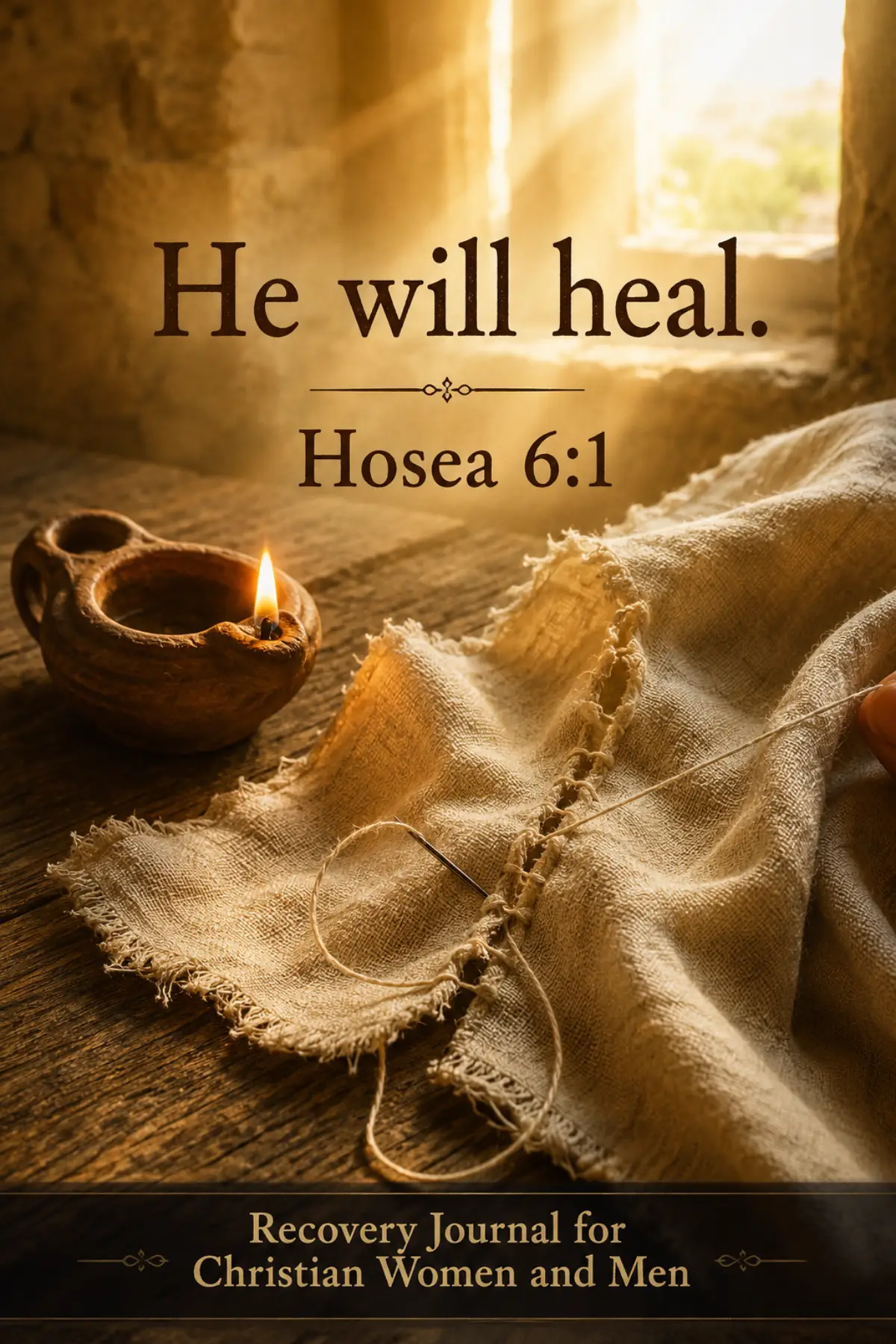
The torn linen, the needle caught mid-stitch, and the steady light make the verse practical. Healing is not shown as instant disappearance. The cloth is still torn, but the thread has entered the wound. The lamp burns low, but it has not gone out. For the grieving heart, this is not a picture of denial. It is the hard mercy of repair: God may begin binding what still looks visibly torn.
Biblical Insight
Hosea speaks to a people who have turned away from the Lord. The book is full of covenant unfaithfulness, warning, judgment, grief, mercy, and the repeated call to return. Hosea 6:1 comes as a summons: “Come, let us return to the Lord.” It is not a casual devotional line. It is covenant language spoken in the shadow of sin, discipline, and the need for restoration.
The verse says, “He has torn us to pieces but he will heal us; he has injured us but he will bind up our wounds.” In context, this refers to the Lord’s dealings with His people. God’s discipline is not meaningless cruelty. He wounds in judgment, yet He is also the One who heals. He exposes the damage that sin and rebellion have brought, yet He remains the only source of true restoration.
This must be handled carefully. Hosea 6:1 should not be thrown at every grieving person as if every bereavement, trauma, illness, or loss can be explained by personal sin or direct punishment. That would be false and cruel. Scripture gives many categories for suffering: a fallen world, human evil, persecution, discipline, testing, weakness, loss, and mysteries we are not permitted to explain fully. The verse should not be used to accuse a wounded person.
At the same time, the verse does speak truthfully about return. When suffering has exposed the heart, when sin has damaged the soul, when grief has revealed distance from God, when pain has made prayer difficult, the right movement is still toward the Lord. Not away. Not into hiding. Not into self-repair as a substitute for repentance, prayer, or trust.
“He will heal” does not mean every earthly wound closes quickly. It does not mean the grieving Christian will stop missing the person who died. It does not mean the scar vanishes, the memory loses its ache, or the circumstances reverse on demand. Binding wounds can be slow work. Some healing begins before it feels complete.
The phrase “bind up our wounds” is deeply practical. A wound left open is vulnerable. Binding protects, holds, covers, and supports the damaged place while healing takes place. Spiritually, God may bind wounds through His word, prayer, repentance, wise counsel, the care of other believers, honest lament, rest, and the slow return of trust.
For a grieving or struggling Christian, Hosea 6:1 matters because pain often tempts the soul either to run from God or to demand immediate repair. This verse gives a steadier path. Return to the Lord. Bring the torn place. Let Him heal in truth, not fantasy. Let Him bind what you cannot hold together.
The verse also refuses shallow comfort. It does not say the cloth was never torn. It does not call injury good in itself. It does not pretend the wound is painless. It says the Lord is able to heal and bind. That is stronger than pretending nothing happened. It is hope with the tear still visible.
In Application
- Return to the Lord with the wound exposed instead of waiting until you feel spiritually tidy.
- Do not use this verse to accuse yourself for every loss; use it to come honestly before the Healer.
- Let God bind the wound through truthful means: prayer, Scripture, repentance, wise help, rest, and patient care.
- Resist demanding instant repair; a wound can be held by God before it feels fully healed.
Practical Journaling
Reflect on Hosea 6:1, then write honestly:
- Where do I feel torn rather than merely hurt?
- What makes returning to the Lord difficult right now: anger, fear, shame, numbness, confusion, or exhaustion?
- What part of me wants to hide the wound instead of bringing it into God’s care?
- What would it look like for God to begin binding this wound, even if the tear remains visible today?
If writing feels too heavy today, pray, “Lord, I return with the torn place still open; bind what I cannot mend.”
The Faith Recovery Journal explores this and many similar topics for Christians facing grief, loss, and recovery.