
Revelation 21:4 — When God Ends Your Tears
The Day Your Tears Will End Is Certain
"He will wipe every tear from their eyes. There will be no more death or mourning or crying or pain, for the old order of things has passed away." — Revelation 21:4 (NIV)
Reflection
Some tears feel as if they belong to the structure of life now. They come in the night, in the car, in church, in the kitchen, in the moment you reach for a phone and remember you cannot make the call. Grief can make crying feel ordinary, as if the heart has learned a language it never wanted to speak.
Revelation 21:4 does not offer a small comfort. It speaks of the final mercy of God: every tear wiped away, death ended, mourning ended, crying ended, pain ended, and the old order of things passed away. This is not the temporary easing of sorrow. This is the end of the world that made sorrow necessary.
Start with the free sample
No email. No signup.
That matters because grief often makes hope sound insulting. When someone is missing, when a grave is real, when the chair is empty, when pain has marked the body or the mind, talk of future comfort can feel too clean. Scripture does not ask you to pretend the present wound is small. It tells you the wound will not have the final word.
The promise is not that you will stop missing what has been lost by trying harder. The promise is that God Himself will deal with tears at their source. He will not merely dry the face while leaving death in charge. He will remove death, mourning, crying, and pain from the order of things.
God does not only count the tears; He will end them.
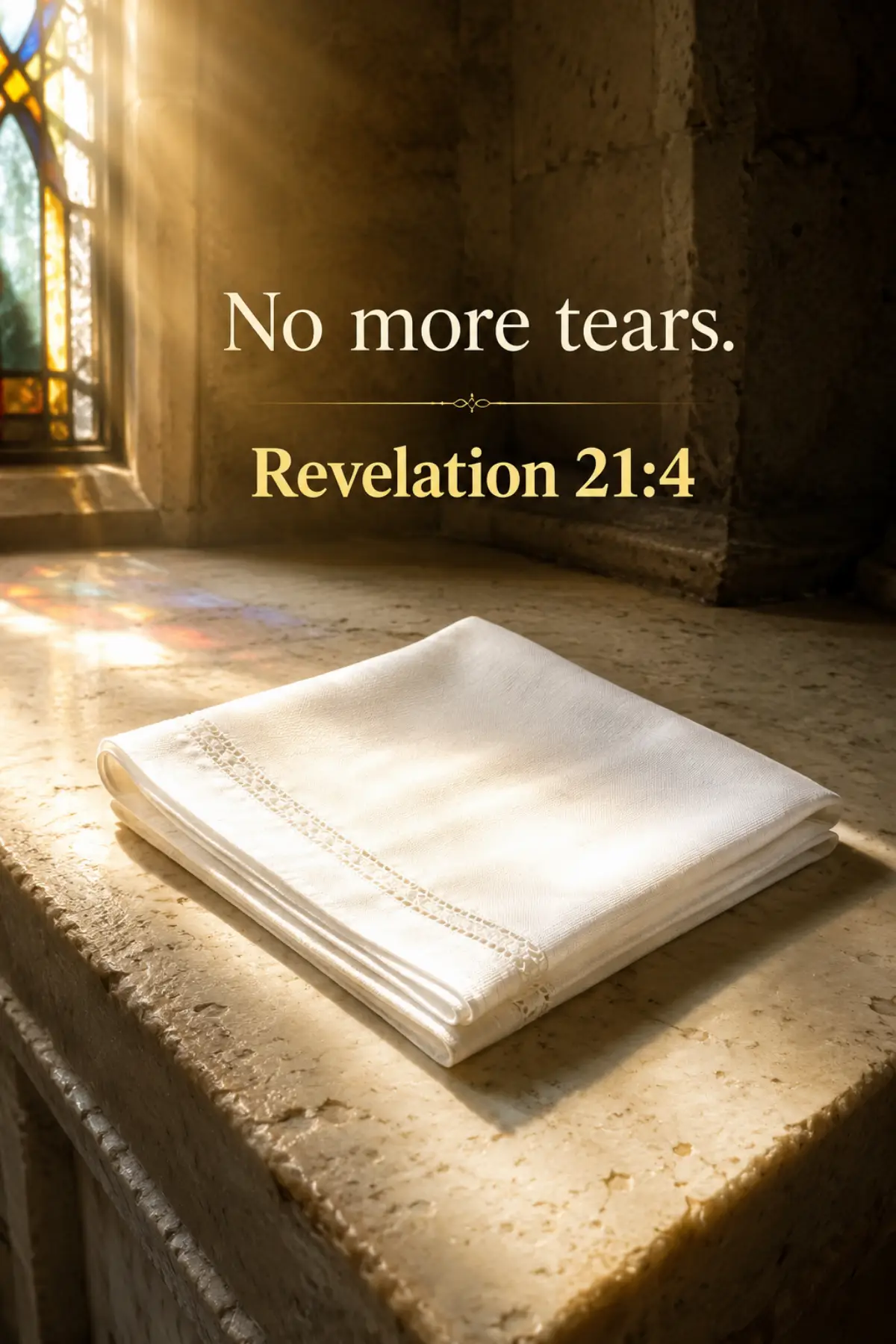
The folded handkerchief rests in dawn light because it is no longer needed in the same way. The pale stone, the chapel stillness, and the faint stained-glass colour speak of a sacred ending, not a sentimental escape. There are no visible tears because the promise of the verse looks beyond the present ache to the day when God’s own hand wipes them away and the old grief-making order has passed.
Biblical Insight
Revelation 21 shows John’s vision of the new heaven and the new earth. The first heaven and the first earth have passed away, and the holy city, the new Jerusalem, comes down out of heaven from God. A loud voice declares that God’s dwelling place is now among His people, and He will dwell with them. They will be His people, and God Himself will be with them and be their God.
Revelation 21:4 follows that declaration with one of the most direct promises of final comfort in Scripture. God will wipe every tear from their eyes. The verse does not say tears were exaggerated. It does not say mourning was foolish. It does not say pain never mattered. It says God will personally and finally remove what caused them.
The promise moves from tears to causes: no more death, no more mourning, no more crying, no more pain. Death is named first because death stands behind so much human grief. Mourning follows because love suffers when death tears apart what should not have been torn apart. Crying and pain follow because the whole old order has been marked by sorrow, weakness, loss, violence, sickness, sin, and decay.
This verse does not promise that Christians will avoid tears now. It does not make bereavement painless. It does not forbid lament. It does not tell the grieving believer to hurry past sorrow because heaven is coming. Scripture gives serious space to mourning in the present, even while it anchors hope in the future.
It also does not reduce Christian hope to vague optimism. Revelation 21 is not a gentle mood. It is the declared future of God’s redeemed creation. The old order of things will pass away. Death will not be rehabilitated. Pain will not be given a permanent place. Mourning will not be normal forever. God will make all things new.
For a grieving or struggling Christian, this matters because grief can make the present feel ultimate. The absence can feel final. The pain can feel permanent. The body can feel as if it will never stop aching. The mind can feel trapped in memory. Revelation 21:4 does not deny the present weight, but it refuses to let the present become the whole truth.
The comfort of this verse is deeply personal. God does not delegate the wiping of tears. The image is tender and direct: He will wipe every tear from their eyes. The same Lord who sees the private grief, the hidden sobbing, the silent ache, and the tears no one else counted will bring His people into a world where those tears no longer belong.
This future hope does not make today easy. It makes today endurable. The Christian can mourn honestly because mourning will end. The Christian can cry without shame because tears are seen by God. The Christian can resist despair because death is not eternal, pain is not sovereign, and the old order is not permanent.
In Application
- Let the promise of final comfort strengthen you without using it to silence today’s grief.
- Bring your tears before God as tears He sees, not as weakness you must hide.
- When death feels final, return to the words “no more death” and let them stand against despair.
- Hold future hope and present mourning together without forcing either one to cancel the other.
Practical Journaling
Reflect on Revelation 21:4, then write honestly:
- Which tears feel most constant, private, or difficult to explain right now?
- What part of “no more death or mourning or crying or pain” do I most need to hold before God today?
- Where have I been tempted to treat the old order of things as if it will last forever?
- What would it mean to grieve honestly while still believing that God Himself will end the tears?

Follow on Medium for More Studies
If writing feels too heavy today, place your tears before God and say, “Lord, You have promised they will not last forever.”
The Faith Recovery Journal explores this and many similar topics for Christians facing grief, loss, and recovery.