
James 5:15 — When Prayer Stands Beside the Sickbed
When Prayer Stands Beside the Sickbed*
"And the prayer offered in faith will make the sick person well; the Lord will raise them up. If they have sinned, they will be forgiven." — James 5:15 (NIV)
*This verse must be handled with care. James 5:15 is not a promise that every illness will be cured immediately in this life if enough people pray with enough faith. If that were so, Christians would need no doctors, nurses, medicine, or hospital beds; only priests at the bedside. The Lord can heal the sick body in this life, and Christians should pray for that healing with faith. But He may also raise His people fully and finally in the life to come. We do not control the timing, method, or visible outcome of God's healing. We entrust the sick person to Christ, who knows whether His mercy will restore them here, sustain them through suffering, or raise them beyond death.
Reflection
Sickness changes the room. A bed becomes a place of waiting. A glass of water becomes important. A folded cloth, a small bottle of oil, a lamp left on through the night — ordinary objects begin to carry the weight of fear, care, and helpless love.
When illness enters grief, the heart can become divided between hope and dread. You pray, but you also watch the body. You believe, but you also hear the machines, count the tablets, read the medical language, and notice every change in breathing, appetite, strength, or pain. Faith does not make the bedside less real.
James 5:15 speaks into that holy and frightening place. It does not tell the sick person to perform strength. It does not tell the grieving family to pretend they are not afraid. It places prayer at the bedside and says the Lord is not absent from sickness, weakness, sin, forgiveness, or the need to be raised up.
Start with the free sample
No email. No signup.
This verse can be painful for Christians who prayed and still watched someone decline. It can be painful for those who asked God for healing and received a funeral instead. Scripture must not be handled carelessly here. James is calling the church to pray in faith, not giving believers a weapon to accuse the suffering or shame the bereaved.
Prayer over sickness is not denial of medicine, diagnosis, frailty, or death. It is the refusal to leave the sickbed to fear alone. The Lord can heal. The Lord can raise up. The Lord can forgive. The Lord can sustain. And even when the body remains weak, prayer places the whole person before Christ.
The sickbed is not outside the reach of Christ.
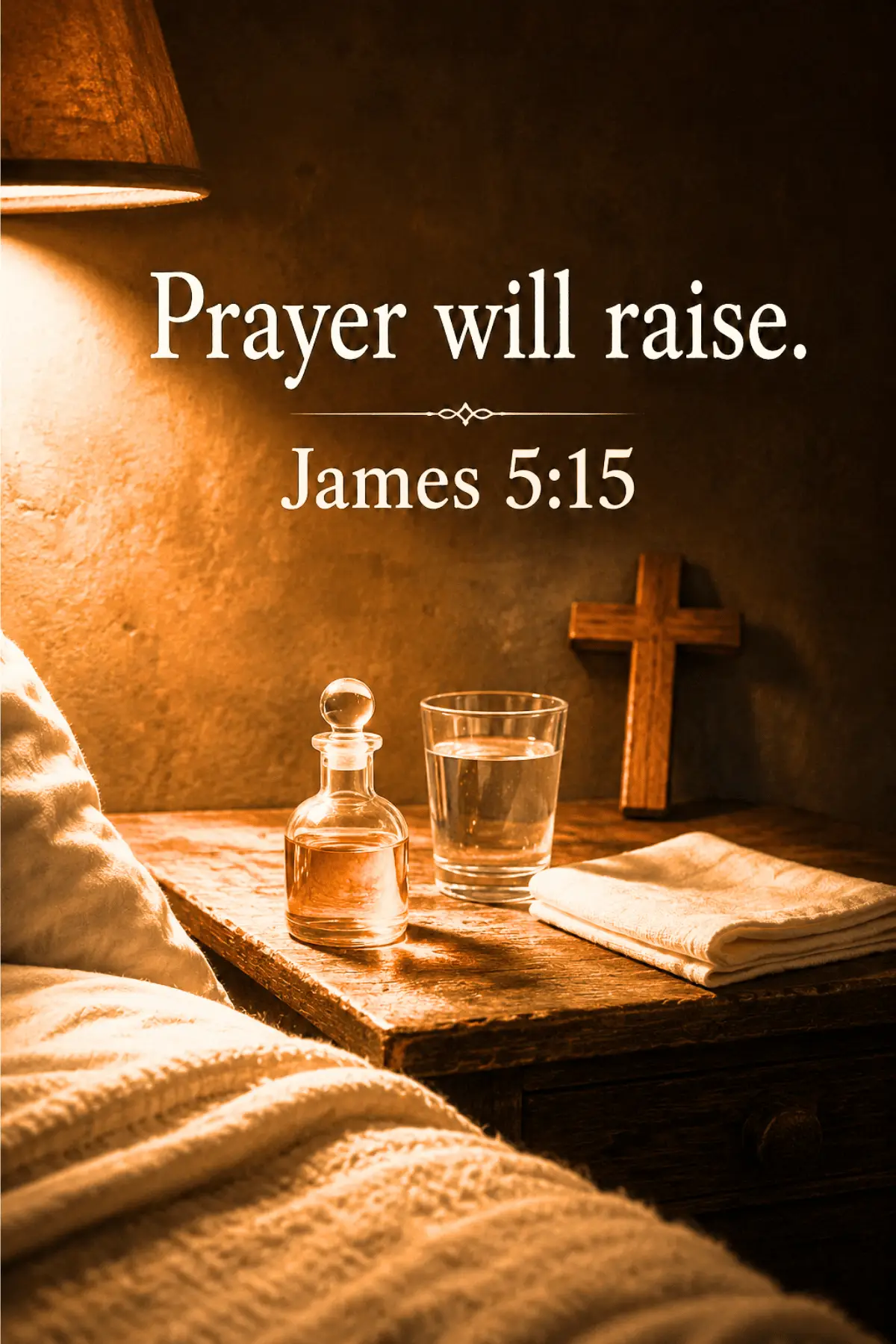
The edge of the bed, the oil, the water, the folded cloth, and the small wooden cross all point to a quiet act of faith under pressure. Nothing is theatrical. No face is shown. The scene leaves room for the fear, the waiting, the whispered prayers, and the exhaustion of those who love the sick person. The oil speaks of being set before God. The water speaks of need. The cross speaks of Christ’s nearness when the body is weak and the outcome is not in human hands.
Biblical Insight
James 5 addresses suffering, prayer, endurance, confession, and care within the community of believers. Just before this verse, James asks whether anyone among them is sick, then instructs them to call the elders of the church to pray over the sick person and anoint them with oil in the name of the Lord. James 5:15 follows that instruction with a strong statement about prayer, healing, being raised up, and forgiveness.
The verse teaches that sickness should not isolate the believer from prayer or from the care of the church. Severe weakness is not a private embarrassment. The sick person is not told to carry everything alone. The elders come. Prayer is offered. The name of the Lord is invoked. The body and soul are both brought before God.
“The prayer offered in faith” is not magical wording. It is not spiritual pressure. It is not a guarantee that the most confident voice in the room controls the outcome. Faith trusts the Lord who hears, heals, forgives, raises, sustains, and judges rightly. The power belongs to Him, not to the emotional force of the person praying.
This verse does not promise that every faithful prayer will result in immediate physical recovery in this life. The New Testament itself shows faithful believers who suffered bodily weakness, danger, affliction, and death. Christians must not use James 5:15 to accuse sick people of lacking faith or to accuse grieving families of praying badly. That is cruelty dressed as doctrine.
At the same time, the verse must not be emptied of its force. James really does call believers to pray over sickness. He really does connect prayer with the Lord’s raising up. He really does hold together healing and forgiveness. The Christian response to sickness is not fatalism. We ask. We pray. We call on the Lord. We entrust the sick person to Christ with serious faith, not vague sentiment.
The mention of forgiveness also matters. James is not saying every sickness is caused by personal sin. The Bible rejects that simplistic thinking. But sickness can bring hidden burdens to the surface: fear, guilt, regret, unresolved confession, spiritual weariness, anger, or shame. The Lord who receives the sick body also receives the troubled conscience. If sin needs forgiveness, Christ is not reluctant.
For a grieving or struggling Christian, this verse matters because illness often leaves people feeling powerless. You may be the one in the bed. You may be the one sitting beside it. You may be remembering a bed that is now empty. James does not give you control over the outcome. He gives you a faithful action: pray, call for help, place the sick and the fearful before the Lord, and refuse to let sickness have the final spiritual authority in the room.
In Application
- Pray honestly over sickness without pretending you are not afraid.
- Ask trusted believers or church elders to pray when illness has become too heavy to carry alone.
- Use medicine, practical care, rest, and prayer without treating them as enemies.
- Bring guilt, regret, or fear before Christ as well as the physical need.
Practical Journaling
Reflect on James 5:15, then write honestly:
- What sickness, weakness, or bedside memory am I carrying before God right now?
- Where do I feel torn between faith, fear, hope, and dread?
- What would it mean to pray in faith without trying to control God’s answer?
- Is there any guilt, confession, regret, or fear I need to bring to Christ while I pray for healing or strength?

Follow on Medium for More Studies
If writing feels too heavy today, simply pray, “Lord, raise what is weak and hold what I cannot control.”
The Faith Recovery Journal explores this and many similar topics for Christians facing grief, loss, and recovery.