
Psalm 28:7 — Trusting God When Your Strength Is Gone
When Prayer Becomes the Place You Collapse
"The Lord is my strength and my shield; my heart trusts in him, and he helps me. My heart leaps for joy, and with my song I praise him."
— Psalm 28:7 (NIV)
Reflection
There are moments when strength does not feel like something you possess. You are not standing boldly. You are not singing loudly. You are not explaining your faith with polished confidence. You are sitting with your face in your hands, trying not to come apart.
Psalm 28:7 speaks from that place more honestly than it may first appear. “The Lord is my strength and my shield” does not mean David felt strong in himself. It means the Lord was his strength when his own strength was insufficient. “My heart trusts in him, and he helps me” does not describe shallow optimism. It describes dependence. Help is needed because weakness is real.
Start with the free sample
No email. No signup.
Grief can make praise feel impossible. The verse speaks of the heart leaping for joy and singing praise, but you may feel miles away from that. You may be sitting in the earlier part of the verse: needing strength, needing a shield, needing help, trying to trust while pain presses hard against your chest.
That does not make the verse unusable. It makes the verse more necessary. The movement in Psalm 28:7 matters: the Lord is strength, the heart trusts, the Lord helps, joy rises, praise follows. Praise is not forced at the beginning as a performance. It comes after help. It comes after the Lord has held the person who could not hold himself.
You do not have to feel strong to trust the One who is.
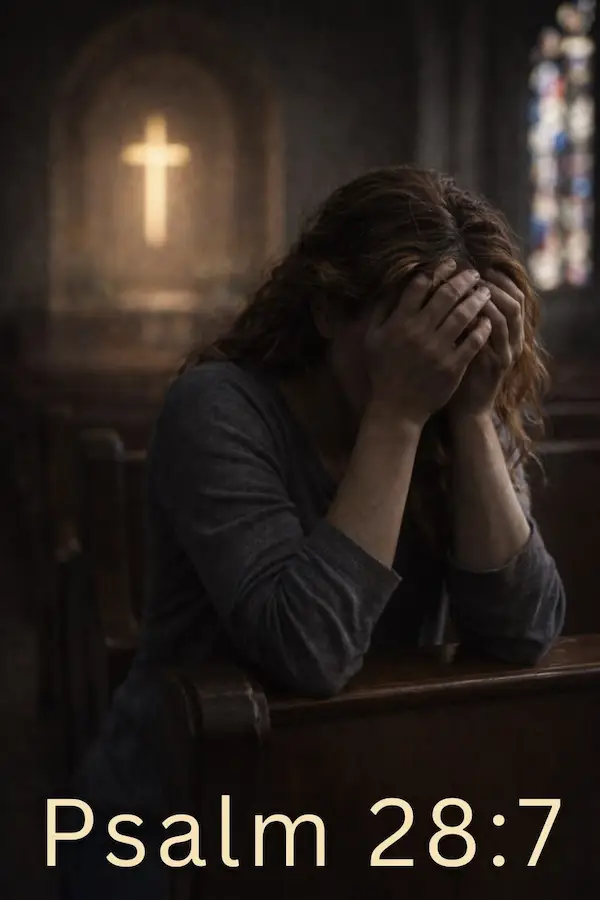
The bowed woman, the dark pew, the glowing cross, and the faint stained glass hold the tension of this verse. The cross is not loud, but it is present. The woman is not looking at it, but its light remains behind her. For someone grieving, afraid, or spiritually worn down, the scene says this: God’s strength may be nearest when your own strength has dropped from your hands. Trust may begin as staying before Him with your face covered and your heart barely able to speak.
Biblical Insight
Psalm 28 is a prayer of David. It begins with urgent pleading: “To you, Lord, I call; you are my Rock, do not turn a deaf ear to me.” David fears silence from God. He asks to be heard. He asks not to be dragged away with the wicked. He brings danger, distress, and moral concern before the Lord.
That context matters because Psalm 28:7 is not written from a life untouched by threat. David’s praise comes after pleading. He does not begin the psalm with easy confidence. He cries out first. Then he declares that the Lord is his strength and shield. The verse is not the denial of distress; it is the answer to distress.
“Strength” means the Lord supplies what David lacks. It is not merely encouragement. It is divine support for a person under pressure. “Shield” means protection. David does not pretend there is no danger. A shield only matters because something threatens. In grief, the threats may not be military, but they are still real: despair, bitterness, isolation, fear, exhaustion, shame, and the temptation to stop praying.
“My heart trusts in him” is also important. Trust is not presented as a vague feeling. It is directed toward the Lord. The heart entrusts itself to God because God is trustworthy. That trust may include emotion, but it does not depend on feeling emotionally settled. A shaking heart can still turn toward God.
The phrase “and he helps me” keeps the verse practical. The Lord is not merely admired from a distance. He acts as helper. The help may not always arrive in the form or timing the sufferer expects. It may come through endurance, protection from collapse, wise counsel, renewed courage, Scripture, prayer, people, rest, or the small strength to take the next necessary step. But David testifies that the Lord helps.
The second half of the verse moves into joy and praise: “My heart leaps for joy, and with my song I praise him.” This does not mean every believer will instantly feel joyful after praying. It does not promise that grief will lift in one moment or that sorrow will vanish because the verse has been read aloud. Scripture gives space for long lament. Psalm 28 itself begins in need before it reaches praise.
For a grieving Christian, this matters because the order protects you from performance. You are not required to manufacture a leaping heart before you ask for help. You may come first as the person in the pew: bent over, covered face, tired body, no song ready. The Lord is still strength and shield before you feel strong or safe.
This verse also reminds you that joy may return as the fruit of help, not as the denial of pain. A heart can praise after being upheld. A song can come after tears. And even before the song returns, the Lord remains the strength of the one who has none left.
In Application
- Start where you truly are: ask the Lord to be your strength before pretending you feel strong.
- Name what you need shielding from today: despair, fear, anger, numbness, shame, or exhaustion.
- Let trust be a directed act toward God, even if your emotions have not caught up.
- Do not force joy as performance; receive any returning praise as the fruit of God’s help.
Practical Journaling
Reflect on Psalm 28:7, then write honestly:
- Where has grief revealed that my own strength is not enough?
- What do I need the Lord to shield my heart from right now?
- What would trusting God look like today if it began with tears rather than confidence?
- Where have I seen even a small sign that God has helped me endure?

Follow on Medium for More Studies
If writing feels too heavy today, pray, “Lord, be my strength and shield while I have none left.”
The Faith Recovery Journal explores this and many similar topics for Christians facing grief, loss, and recovery.