
Acts 1:14 — When Waiting Needs United Prayer
United Prayer Helps When Waiting
"They all joined together constantly in prayer, along with the women and Mary the mother of Jesus, and with his brothers." — Acts 1:14 (NIV)
Reflection
Waiting can feel lonelier than the loss itself. After the shock, after the funeral, after the visitors leave, after the first wave of messages fades, there is often a room where nothing seems to move. You are still here. The ache is still here. The next clear answer has not arrived.
Acts 1:14 indicates the early believers in that kind of space. Jesus had ascended. The promise of the Holy Spirit had been given, but Pentecost had not yet come. They were between command and fulfilment, between what they had seen and what they could not yet see. They joined together constantly in prayer.
Start with the free sample
No email. No signup.
That matters when grief has made you withdraw. Sorrow can make company feel exhausting. It can make church feel too bright, too loud, too full of people who do not know what to say. Sometimes you need quiet. Sometimes you need solitude. But grief becomes more dangerous when isolation turns into a sealed room with no prayer, no witness, and no one allowed near the wound.
The believers in Acts did not wait alone. Mary was there. The women were there. The apostles were there. Jesus’ brothers were there. They did not all carry the same memories, losses, fears, or histories, but they gathered in one accord before God. Their unity did not remove the waiting. It gave the waiting a place to pray.
Do not let grief make you wait alone.
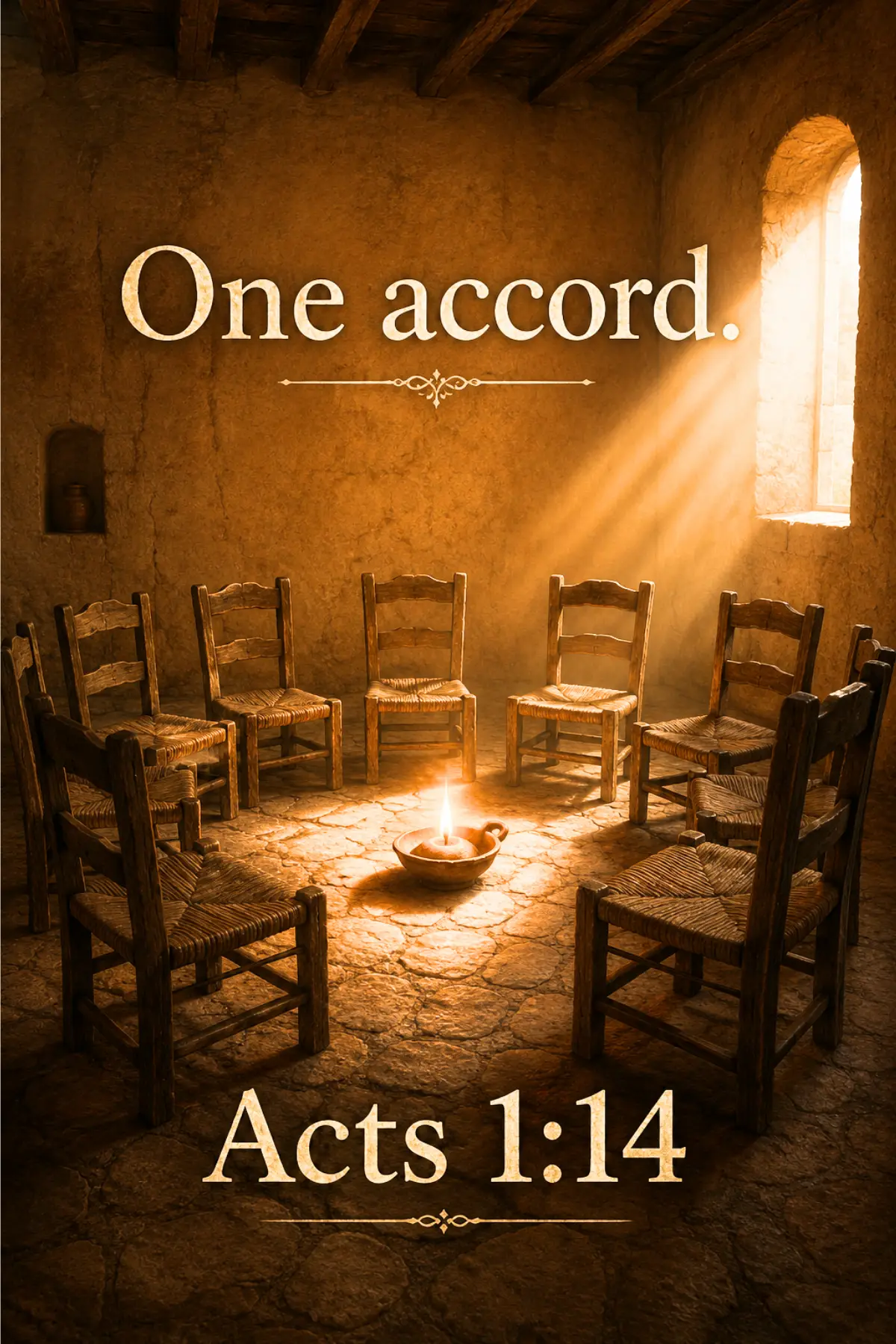
The circle of chairs speaks of people making room for one another. The single lamp at the centre holds the focus where it belongs: not on performance, not on explanation, but on prayer before God. The bright window light suggests that waiting has not closed the future, even while the room remains quiet. For the grieving heart, this scene says that shared prayer can hold you steady when you cannot yet see what comes next.
Biblical Insight
Acts 1 takes place after the resurrection of Jesus and His ascension into heaven. The disciples had seen the risen Lord. They had received His instruction to wait for the gift promised by the Father. They had been told that they would receive power when the Holy Spirit came upon them and that they would be His witnesses. Then Jesus was taken up before their eyes.
Acts 1:14 shows what they did next. They did not rush into activity. They did not scatter into private panic. They joined together constantly in prayer. The verse names a gathered community: the apostles, the women, Mary the mother of Jesus, and Jesus’ brothers. The early church is seen waiting, praying, and remaining together before the great public events of Acts 2.
The phrase translated “joined together” carries the sense of shared purpose and united attention. “One accord” is not shallow agreement or forced emotional sameness. It is a gathered surrender before God. They were not identical people with identical griefs. Mary’s suffering was not the same as Peter’s failure, or the brothers’ earlier unbelief, or the women’s memories of the cross and tomb. Yet they prayed together.
This verse does not promise that gathered prayer will remove waiting quickly. The believers still had to wait. They still did not control the timing of the Spirit’s coming. Prayer did not make them managers of God’s calendar. It made them obedient, dependent, and united while they waited.
It also does not mean that every group is safe or every religious gathering is healing. Some people speak too quickly around grief. Some communities avoid pain. Some pressure the wounded to appear fine. Acts 1:14 does not command careless exposure to unsafe people. It shows the beauty of prayerful fellowship where the focus remains on the Lord and His promise.
For a grieving or struggling Christian, this matters because pain often narrows the world. You may stop answering calls. You may avoid worship because tears feel embarrassing. You may resent cheerful people. You may feel that nobody can understand, so nobody should be allowed close. Some withdrawal is understandable. But prolonged isolation can leave grief unchallenged, unprayed, and unshared.
The gathered believers give a better picture. They waited together. They prayed constantly. They made room for women, family, leaders, restored failures, and those still learning what obedience would require. Their unity was not based on having everything resolved. It was based on seeking God together in the space before the next clear step.
Christian grief needs that kind of room. Not a noisy room. Not a performative room. Not a room full of clichés. A praying room. A room where silence can sit with Scripture-shaped hope. A room where the lamp stays lit at the centre, and the wounded do not have to hold the waiting alone.
In Application
- Choose one safe believer or small group who can pray with you without forcing explanations.
- Do not mistake isolation for strength when grief has begun to cut you off from care.
- Let prayer be shared even when you have no clear words beyond “Lord, help.”
- Look for one small way to re-enter fellowship: a message, a quiet service, a prayer meeting, or one honest conversation.
Practical Journaling
Reflect on Acts 1:14, then write honestly:
- Where am I waiting right now, and what makes that waiting feel lonely?
- Who are the safe people God has placed near me for prayer, presence, or steady companionship?
- What keeps me from joining others in prayer: exhaustion, fear, shame, anger, disappointment, or distrust?
- What would “one accord” look like for me this week: asking for prayer, attending quietly, praying with one person, or allowing someone to sit with me?

Follow on Medium for More Studies
If writing feels too heavy today, ask one trusted person to pray one simple prayer with you.
The Faith Recovery Journal explores this and many similar topics for Christians facing grief, loss, and recovery.