
Isaiah 30:15 – In Quietness and Trust Is Your Strength
When You Cannot Outrun What Only God Can Hold
"In repentance and rest is your salvation, in quietness and trust is your strength..."
— Isaiah 30:15 (NIV)
Reflection
You keep moving because stopping feels dangerous. If you stop, the grief catches up. The fear gets louder. The questions you have been outrunning begin to stand in front of you. So you push, plan, answer, fix, chase, defend, explain, and exhaust yourself trying to stay ahead of what hurts.
Isaiah 30:15 speaks into that pressure with a hard kindness: “In repentance and rest is your salvation, in quietness and trust is your strength.” This is not a soft invitation to become passive. It is a command to stop trusting panic more than God. It is a call to turn back from frantic self-rescue and return to the Lord who alone can save.
Grief can make rest feel irresponsible. Anxiety can make quietness feel like surrender to danger. Waiting can make trust feel foolish. But Scripture does not call frantic motion strength. It says strength is found in quietness and trust. That means some of the movement you call survival may actually be draining the strength God is calling you to receive.
Start with the free sample
No email. No signup.
Repentance here is not merely feeling bad. It is turning around. It is admitting where fear has begun to direct your decisions. It is naming where you have been looking for rescue apart from God. It is refusing to keep feeding the lie that if you stop striving for one moment, everything will collapse.
Rest is not denial. Quietness is not weakness. Trust is not pretending the threat is small. In Isaiah 30:15, the Lord offers His people a strength that does not come from speed, control, or constant reaction. He calls them to return to Him, stop fighting in their own wisdom, and receive salvation in the place where they most want to run.
Some strength only begins when you stop.
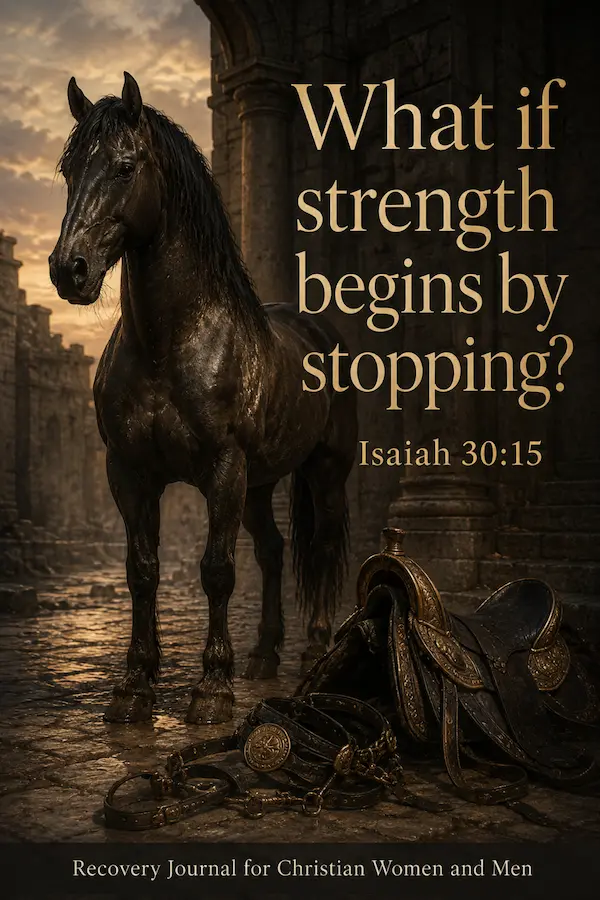
A dark horse stands unsaddled beside ancient stone columns, with the saddle, bridle, and reins lying on the wet ground beneath the words “What if strength begins by stopping?” and Isaiah 30:15. The abandoned riding gear turns the verse into a visible surrender: not collapse, not defeat, but the refusal to keep fleeing when God is calling His people into repentance, rest, quietness, and trust.
Biblical Insight
Isaiah 30 addresses Judah during a time of danger and political fear. Instead of returning to the Lord, the people looked to Egypt for help. They wanted security through alliances, horses, speed, and human power. The Lord exposed that instinct. Their problem was not that they felt afraid. Their problem was that fear led them to reject God’s counsel and seek rescue elsewhere.
Isaiah 30:15 is therefore not a general slogan about having a quiet personality. It is a word spoken to people tempted to survive by panic, strategy, and disobedient self-protection. The Lord says salvation is found in repentance and rest. That means turning back to Him and ceasing from the desperate belief that human control can save what only God can save.
“In quietness and trust is your strength” does not mean Christians should never act, plan, ask for help, make decisions, or face responsibilities. Scripture does not praise laziness or denial. The issue is where strength is being sought. Are you acting from trust, or are you being driven by terror? Are you obeying God, or are you trying to outrun Him? Are you carrying what He has given you to carry, or are you trying to seize control because waiting feels unbearable?
This verse also has a painful ending in its original context: “but you would have none of it.” That line matters. God offered repentance, rest, quietness, and trust, but His people refused. They preferred motion to surrender. They preferred speed to dependence. They preferred visible help to unseen faithfulness. The verse confronts that refusal in us too.
For a grieving Christian, Isaiah 30:15 matters because grief often produces frantic forms of survival. Some people bury themselves in work. Some keep talking so they never have to sit in silence. Some rush decisions. Some try to manage everyone else’s emotions. Some chase distraction because stillness feels like falling apart. None of those responses should be mocked. They are often born from pain. But they cannot become your saviour.
The Lord’s call is firm and merciful: return, rest, be quiet, trust. This does not erase grief. It does not promise instant emotional calm. It does not mean every external pressure disappears. It means God calls His people away from fear-led striving and back to Himself. Strength is not found in outrunning sorrow. Strength is found in trusting the Lord while sorrow is still present.
In Application
- Name the place where you are moving from panic rather than trust. Do not excuse it or condemn yourself for it; bring it into the light before God.
- Practise one act of repentance by turning away from a fear-led response and asking, “Lord, what would obedience look like here?”
- Choose a short period of quietness today without filling it with noise, scrolling, fixing, or explaining. Let the discomfort become prayer.
- Refuse to treat rest as spiritual failure. If God says quietness and trust are strength, then stopping before Him may be obedience.
Practical Journaling
Reflect on Isaiah 30:15, then write honestly:
- What am I trying to outrun right now?
- Where has grief or fear pushed me into constant motion?
- What would repentance and rest look like in this specific pressure, not in theory?
- What do I find hardest about quietness and trust: the silence, the waiting, the lack of control, or the fear that God will not act?

Follow on Medium for More Studies
If writing feels too heavy today, write only this: Lord, teach me to stop where You are calling me to trust.
The Faith Recovery Journal explores this and many similar topics for Christians facing grief, loss, and recovery.