
Silent Prayer: Speaking to God without Words
Silent Prayer: Speaking to God without Words
There are times in grief when prayer becomes difficult for a reason that has nothing to do with faith. You simply cannot find the words.
You know you need God. You may desperately want to pray. But careful sentences are beyond you. Your thoughts will not organise themselves. You begin a prayer and lose it halfway through. Or you sit before God with nothing more articulate than pain, exhaustion, anger, fear, or need.
That does not mean there is nothing to pray.
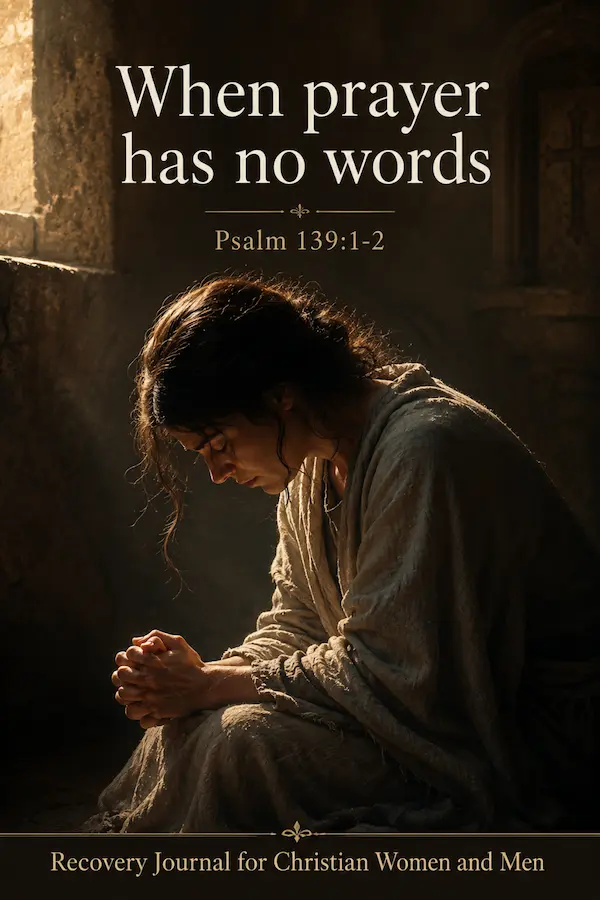
Psalm 139 begins with something deeply important for anyone who has reached that point:
"You have searched me, Lord, and you know me. You know when I sit and when I rise; you perceive my thoughts from afar."
— Psalm 139:1-2 (NIV)
God's knowledge of you does not begin when you successfully turn what you are feeling into sentences. He already knows. He knows the thought before you manage to explain it. He knows the grief beneath the silence, the fear beneath the anger, and the exhaustion that sometimes leaves you unable to say anything at all.
You Do Not Have to Perform a Prayer
Prayer is not an exercise in producing the right words for God. You do not need a polished opening, a carefully structured explanation, or a suitably spiritual conclusion.
Sometimes prayer is simply remaining consciously before God with what is actually there.
Close your eyes if that helps. Settle yourself as best you can. Turn your attention deliberately toward God, and allow yourself to bring Him what you cannot yet put into words.
You may be able to name only one thing: I miss them. I am frightened. I am angry. I cannot do this today. Please help me. You may not even have that much. Silence itself can be honest when silence is all you have.
The point is not to manufacture a feeling of peace. It is to stop believing that your inability to speak clearly has shut you out of prayer.
You do not need to explain your grief perfectly to the God who already knows it.
Silence Can Hold More Than Sorrow
Silent prayer is not only for despair. There are moments of gratitude that are also larger than language. Something unexpectedly kind happens. You remember someone with affection rather than pain. You survive a day you were dreading. For a moment, you simply know that you are grateful.
You do not have to turn that into an eloquent thanksgiving either. Let yourself recognise the gratitude before God. A slight smile, a released breath, or a quiet acknowledgement may express more truthfully what is happening than a paragraph of forced devotional language.
The same applies when sorrow returns. You do not need to restrain the tears in order to pray properly. If you are grieving, grieve before God. If you are angry, do not pretend serenity. If you are frightened, bring Him the fear rather than the prayer you think a stronger Christian ought to be able to offer.
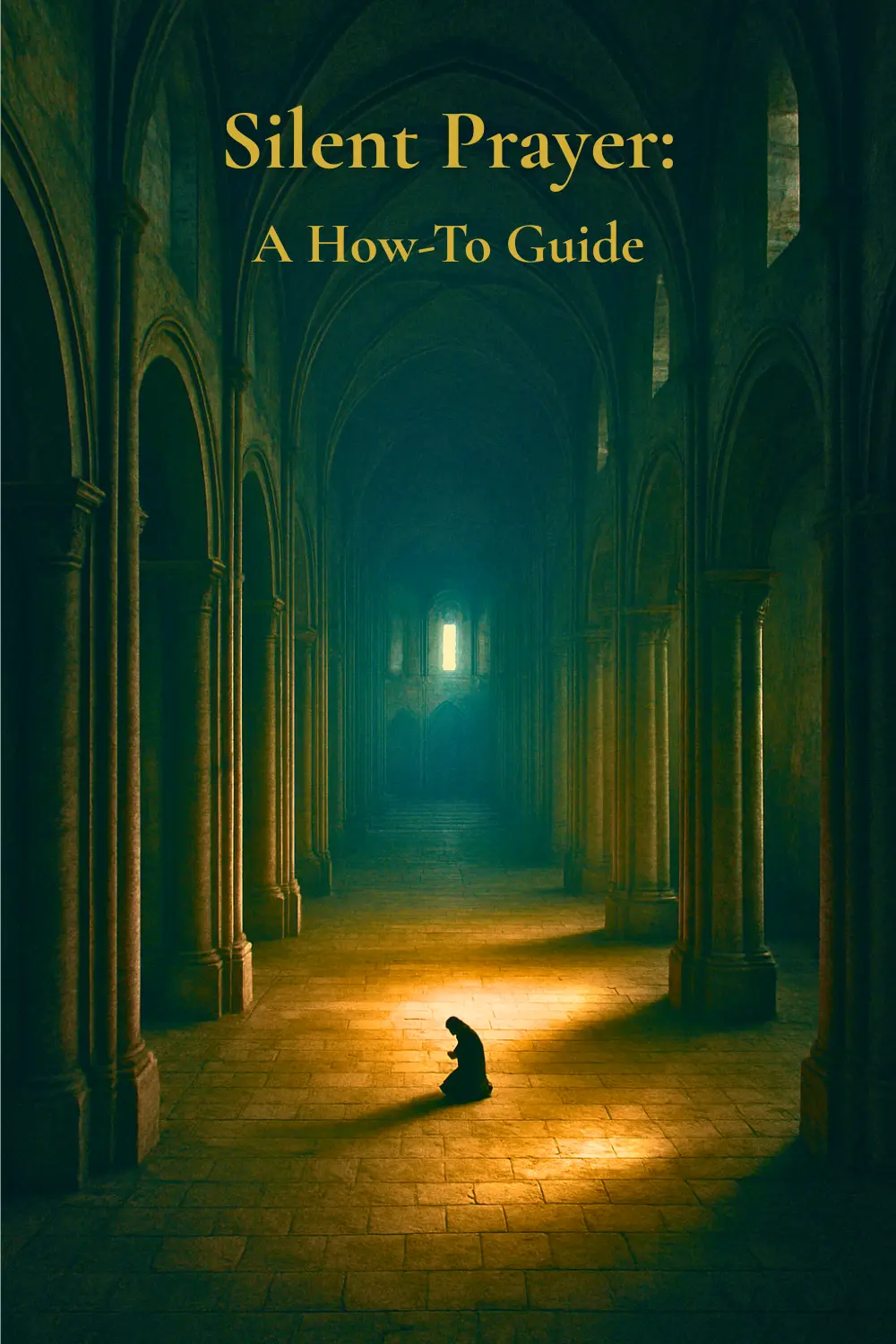
The solitary figure beneath the immense cathedral space reflects the disproportion grief can create between what you are carrying and your ability to express it. Yet he has still come before God. The silence has not ended the prayer. Psalm 139 gives that silence its Christian foundation: God already knows the person who has no words left.
What Silent Prayer Is Not
Silent prayer is not an attempt to empty your mind or make yourself emotionally blank. Nor is it a promise that sitting quietly before God will immediately produce comfort.
You may finish the prayer still grieving. You may still have unanswered questions. You may still feel exhausted.
What has changed is simpler: you have refused to treat the absence of words as the absence of prayer.
Psalm 139 does not describe a distant God waiting for you to explain yourself correctly. It describes the Lord who has searched you, knows you, and perceives your thoughts from afar. That is why you can come to Him before the sentences are ready.
So if you have no careful words today, do not force them. Sit quietly. Turn your attention toward God. Let the need itself be brought before Him.
And if all you can manage is, Father, You know, that is still prayer.
📖 Download the Extended Sample (PDF, 134 pages)
(No email or signup required)