
When Grief Journalling Makes You Feel Worse
Grief journalling can sometimes leave you feeling worse, especially when writing brings painful memories, guilt, anger, fear, or unanswered questions into sharper focus. A difficult session does not automatically mean journalling is harming you, but repeated distress without greater clarity is a sign to change how you are using it.
This can be confusing because journalling is usually recommended as something helpful. You may therefore assume that feeling worse afterwards means you are doing it badly, avoiding the "right" kind of reflection, or somehow failing to benefit from a method that seems to help other people.
The reality is more complicated. Writing directs your attention towards material you might otherwise keep partly at a distance. That can increase distress in the short term. The useful question is what happens afterwards: whether the writing helps you understand something, name something, or recognise a pattern, and whether the emotional effect settles within a reasonable period.
Why Writing Can Make Grief Feel More Intense
Grief often moves in and out of conscious attention. You may spend part of the day working, dealing with family, handling practical responsibilities, or simply concentrating on whatever is immediately in front of you. Opening a journal deliberately turns your attention back towards the loss.
That shift can feel abrupt. A memory that had remained in the background becomes detailed again. A question you had managed to avoid becomes difficult to ignore. You may notice anger that had been disguised as tiredness, or guilt that had been sitting underneath a more general feeling of sadness.
Writing can also slow thoughts down enough for their emotional content to become clearer. A memory that flashes through your mind in a few seconds may occupy a page once you begin describing what happened, what you felt, and what you wish had been different.
The increase in distress therefore has an understandable source. You have brought something painful closer to your attention and given it more time than you usually do.
Feeling Upset Afterwards Does Not Tell You Everything
The immediate emotional effect of journalling is only one part of the picture.
You may finish an entry in tears and still have gained something useful from writing it. Perhaps you finally recognised why a particular anniversary has been troubling you, or realised that the anger you have been directing at yourself properly belongs elsewhere. You may have put into words something you have been unable to explain to anybody else.
In those cases, the session may have been painful while still helping you see your grief more clearly.
Pay attention to what happens during the hours that follow. Distress that settles after some time is different from distress that continues to escalate. Feeling emotionally tired after writing about a difficult memory differs from being unable to function for the rest of the day because the writing has left you overwhelmed.
The distinction is practical rather than theoretical. You are trying to judge what the writing actually does to you over time.
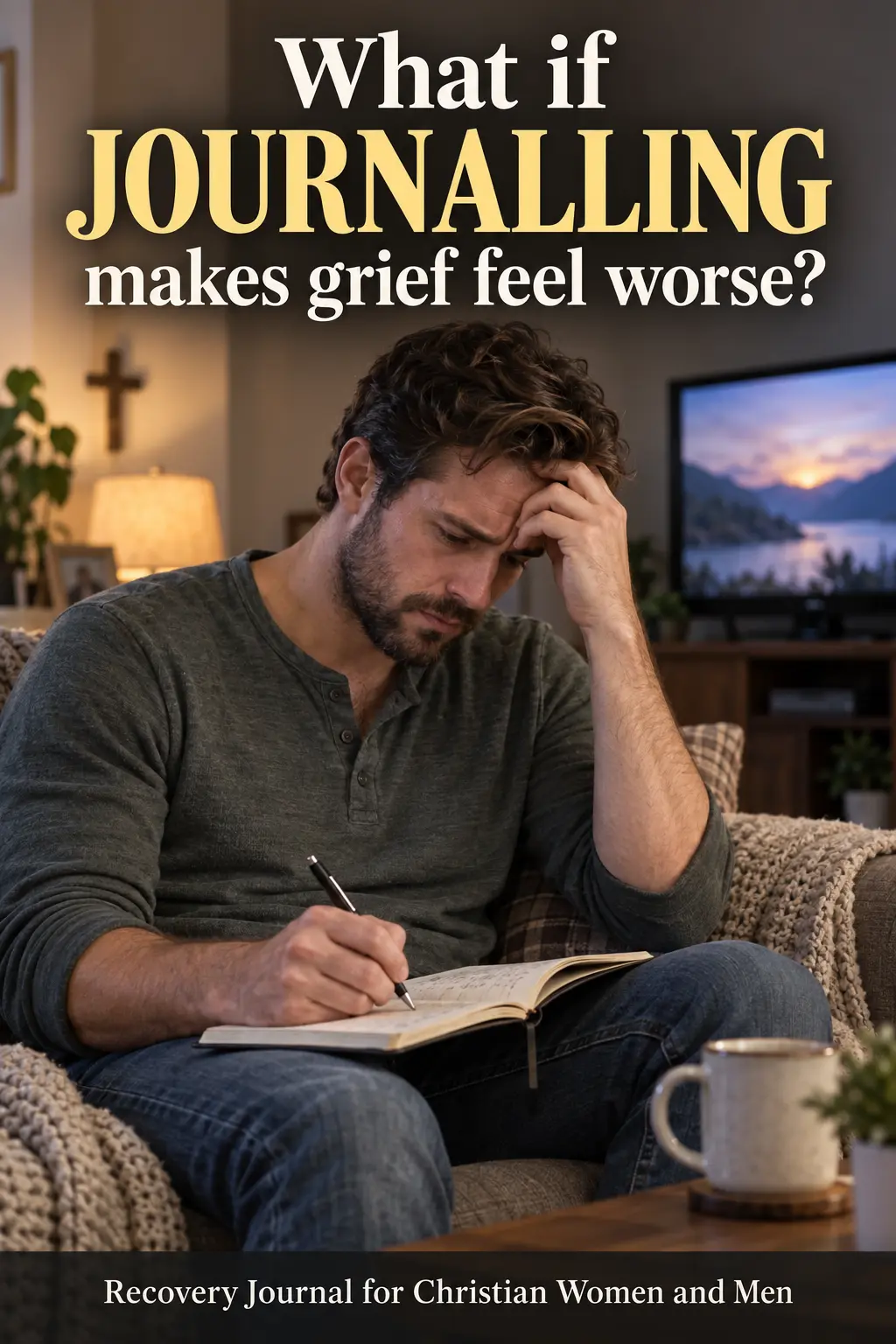
Some Subjects Need a Smaller Approach
A common problem is trying to write about too much at once.
"Write about the death" is an enormous task. It may include illness, medical decisions, family conflict, the final hours, funeral arrangements, guilt, financial consequences, anger with God, and fears about the future. Bringing all of that onto the page in one sitting can easily become overwhelming.
Narrowing the subject can make the writing more manageable. Instead of trying to describe the entire experience, you might focus on one memory, one conversation, one fear, or one question.
For example, you might write about why one particular photograph is difficult to look at, what you miss most this week, or which part of an approaching anniversary concerns you most. The smaller question gives you boundaries around the entry.
You can stop when you have dealt with that piece. There is no requirement to continue simply because other material has started appearing in your mind.
You Can Stop Before the Entry Feels Finished
Grieving people sometimes continue writing because they assume an entry should reach some kind of conclusion. That expectation can keep you on the page long after the session has stopped being useful.
You are allowed to stop halfway through a thought. If you notice that concentration is disappearing, emotion is rising too quickly, or you are moving into material you do not want to handle at that moment, close the journal. You can return later if you choose.
An unfinished entry can still tell you something. It may show where the subject became difficult, which memory changed the emotional tone, or where you began to feel overwhelmed.
That information can be useful without requiring you to push through the rest of the experience in one sitting.
Start with the free sample
No email. No signup.
Timing Matters More Than People Sometimes Admit
The same prompt can be manageable on one day and too much on another.
Writing after a reasonably settled afternoon may be very different from writing at two o'clock in the morning when you are exhausted and already distressed. A difficult entry just before work, before an important appointment, or before you need to care for somebody else may leave you with no time to recover from the emotional effect.
There is value in choosing when to engage with heavier material.
You may decide that certain subjects are better left for a time when you have fewer demands immediately afterwards. Shorter entries may be more suitable late at night. On days when you are already overwhelmed, a practical or memory-based entry may be easier to manage than writing about guilt, anger, or the circumstances of the death.
Good journalling does not require treating every available moment as equally suitable for difficult reflection.
Repeated Writing Can Become Repetitive Thinking
One of the clearest signs that journalling needs adjustment is when every entry returns to the same accusation, imagined alternative, fear, or unresolved question without developing.
You may repeatedly write that you should have noticed something sooner, that a doctor should have acted differently, that God should have answered your prayer, or that one decision changed everything.
Repetition can be useful when each return adds detail or understanding. It becomes less useful when the page merely gives the same thought another opportunity to dominate your attention.
Rereading earlier entries can help you judge the difference. Look for changes in language, specificity, emotional intensity, or understanding. If every entry reaches exactly the same place, another approach may be more helpful for a while.
You could change the question, write about a different aspect of your life, pause the subject completely, or take the issue to somebody who can offer an outside perspective.
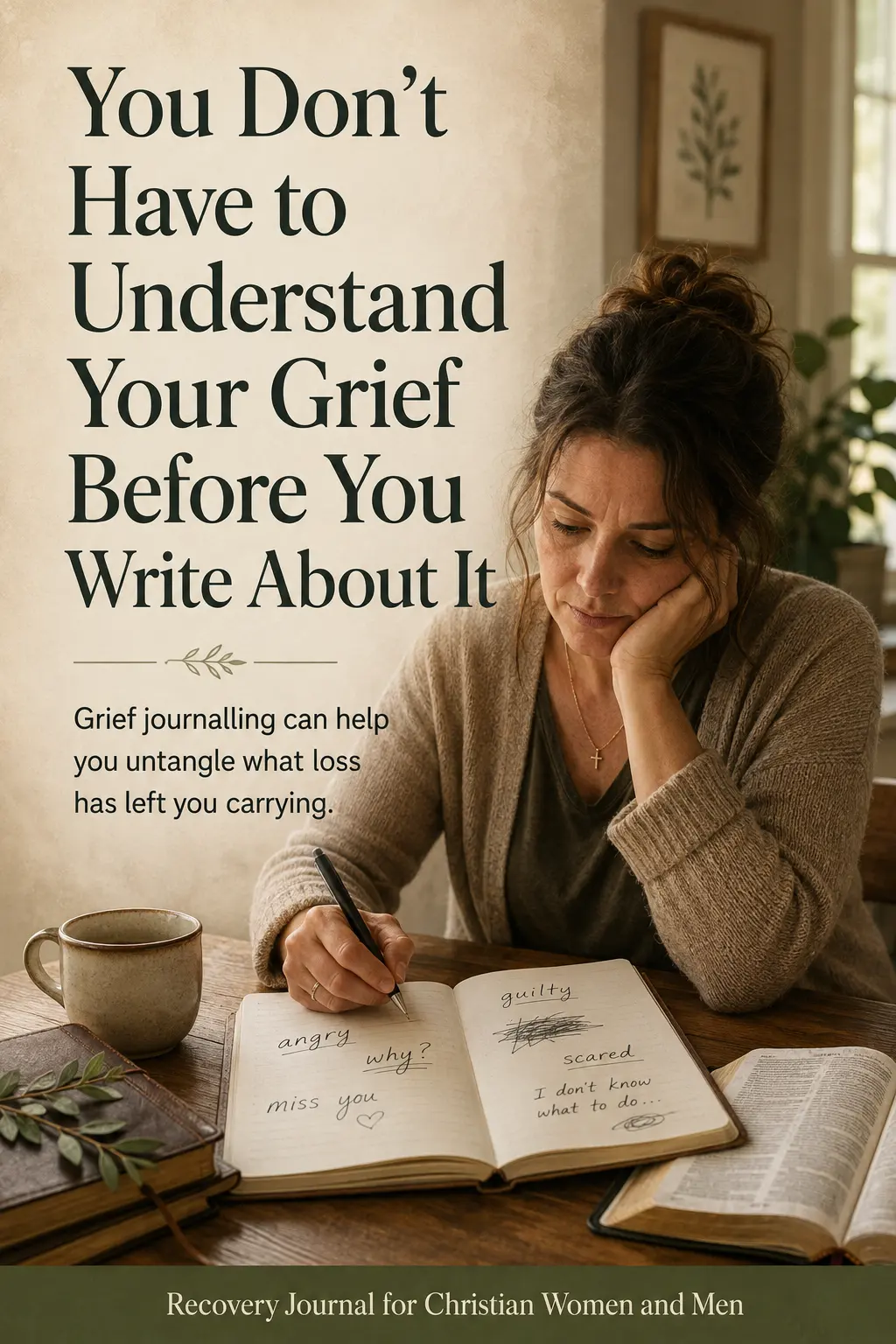
Try Describing Before Interpreting
When journalling repeatedly intensifies emotion, it can help to spend less time immediately analysing what everything means.
Begin with what happened.
Describe the event, the memory, or the moment as plainly as you can: what was said, where you were, what you noticed, and what happened next.
Once the facts are on the page, you can decide whether you want to move into interpretation.
This can be useful when your mind quickly turns every memory into a judgement about yourself or somebody else. Describing first gives you a little more distance and may help you distinguish the event from the meaning you have attached to it.
You may still reach the same conclusion, but you will have approached it more deliberately.
A Structured Journal Can Keep You From Going Too Deep Too Quickly
Blank-page journalling gives you complete freedom, which can be useful, but complete freedom can also mean repeatedly entering the most painful part of your grief without much direction.
A structured grief journal can narrow the focus and provide a sequence. One entry may deal with anger, another with memory, loneliness, fear, gratitude, prayer, or practical change. That variety can prevent one difficult subject from consuming every session.
The Recovery Journal for Christian Women and Men uses Scripture, reflection, and guided writing to provide that structure while allowing you to move at your own pace. There are no calendar dates forcing you to continue before you are ready.
Christian Journalling Can Become Spiritually Punishing
Christian grief journalling has its own particular danger when every entry becomes an attempt to correct yourself spiritually.
You may write honestly that you are angry with God, then immediately spend the rest of the entry trying to cancel the anger. You may admit that prayer feels pointless and then force yourself into a conclusion about trusting more. A difficult passage of Scripture may trouble you, but you may feel obliged to write that it comforts you anyway.
That kind of writing can leave you feeling worse because the page becomes another place where you are policing your grief.
The Psalms offer a broader vocabulary. They contain fear, complaint, accusation, confusion, remembrance, petition, and praise. Some passages move towards reassurance; others leave considerable tension on the page.
Your grief journal can do the same.
If you are angry with God, you can write about the anger without trying to resolve it before the entry ends; if a verse feels remote, examine why; and if prayer feels impossible, write about the difficulty itself.
Honesty before God can include the parts of grief that do not yet fit neatly into the language of comfort.
What If You Feel Worse Every Time You Write?
A pattern matters more than one difficult session.
If journalling regularly leaves you distressed for hours, repeatedly disrupts sleep, makes concentration harder, or increases your reluctance to deal with ordinary life, change the practice.
You might write less often, shorten sessions, choose less intense subjects, stop rereading painful entries for a while, or take a complete break.
There is no virtue in continuing a practice that is consistently making your days harder.
It may also help to ask whether the journal is the only place where you are dealing with grief. Private writing is valuable, but there are limits to what solitary reflection can do. Some problems need conversation, practical advice, pastoral support, counselling, medical help, or simply the perspective of another person who can see what you cannot.
Know When Journalling Is No Longer Enough
There are circumstances in which changing your journalling method is insufficient because the problem has moved beyond the page.
Take the situation seriously if you are unable to manage basic daily life, increasingly dependent on alcohol or drugs to cope, repeatedly overwhelmed by traumatic memories, or finding that thoughts of death or self-harm are becoming more persistent.
Do not rely on journalling alone in those circumstances.
If you think you may harm yourself, are in immediate danger, or cannot keep yourself safe, seek urgent help now.
When Grief Journalling Makes You Feel Worse
Feeling worse after writing does not automatically mean the practice has failed. Painful material can become more intense when you give it sustained attention, and some useful entries are emotionally difficult.
Watch the pattern rather than judging one session in isolation. If distress settles and the writing leaves you with greater clarity, the discomfort may have served a purpose. When journalling repeatedly leaves you more distressed, less able to function, or trapped in the same thoughts, reduce the intensity, change the subject, shorten the session, or stop for a while.
Your journal is supposed to help you work with grief. You are allowed to change how you use it whenever the writing stops helping.