
Isaiah 12:2 — Fearless Trust in the God Who Saves
When Fear Wants to Decide What Happens Next
"Surely God is my salvation; I will trust and not be afraid. The Lord, the Lord Himself, is my strength and my defence; He has become my salvation."
— Isaiah 12:2 (NIV)
Reflection
Fear does not always arrive as panic. Sometimes it arrives as control. It tells you to pull back, stay silent, expect the worst, stop hoping, and protect whatever is left. After grief, fear can sound reasonable. It can sound like wisdom. It can sound like the only voice telling the truth.
Isaiah 12:2 speaks directly into that pressure. “Surely God is my salvation; I will trust and not be afraid.” The verse does not pretend fear has no force. It answers fear with a stronger confession. The believer is not saying, “Nothing frightens me.” The believer is saying, “Fear will not rule me, because God Himself is my salvation.”
That matters when grief has trained your body to brace for the next blow. You may not feel brave. You may not feel settled. You may not even feel able to pray with confidence. But this verse does not rest on your emotional strength. It says, “The Lord, the Lord Himself, is my strength and my defence.” Not your mood. Not your certainty. Not your ability to stay calm. The Lord Himself.
Start with the free sample
No email. No signup.
There are times when telling yourself not to be afraid only makes the fear louder. You know the arguments. You know the reassuring phrases. You know what other people would say if you admitted how frightened you are. But grief does not always respond to neat answers. Sometimes you need a confession strong enough to carry while your emotions are still shaking.
Isaiah gives you that confession. God is not merely near the idea of salvation. He is salvation. He is not merely offering strength from a distance. He Himself is strength. He is not a decorative comfort added to an otherwise terrifying life. He is defence when you have no defence left.
Fear may speak, but it must not rule.
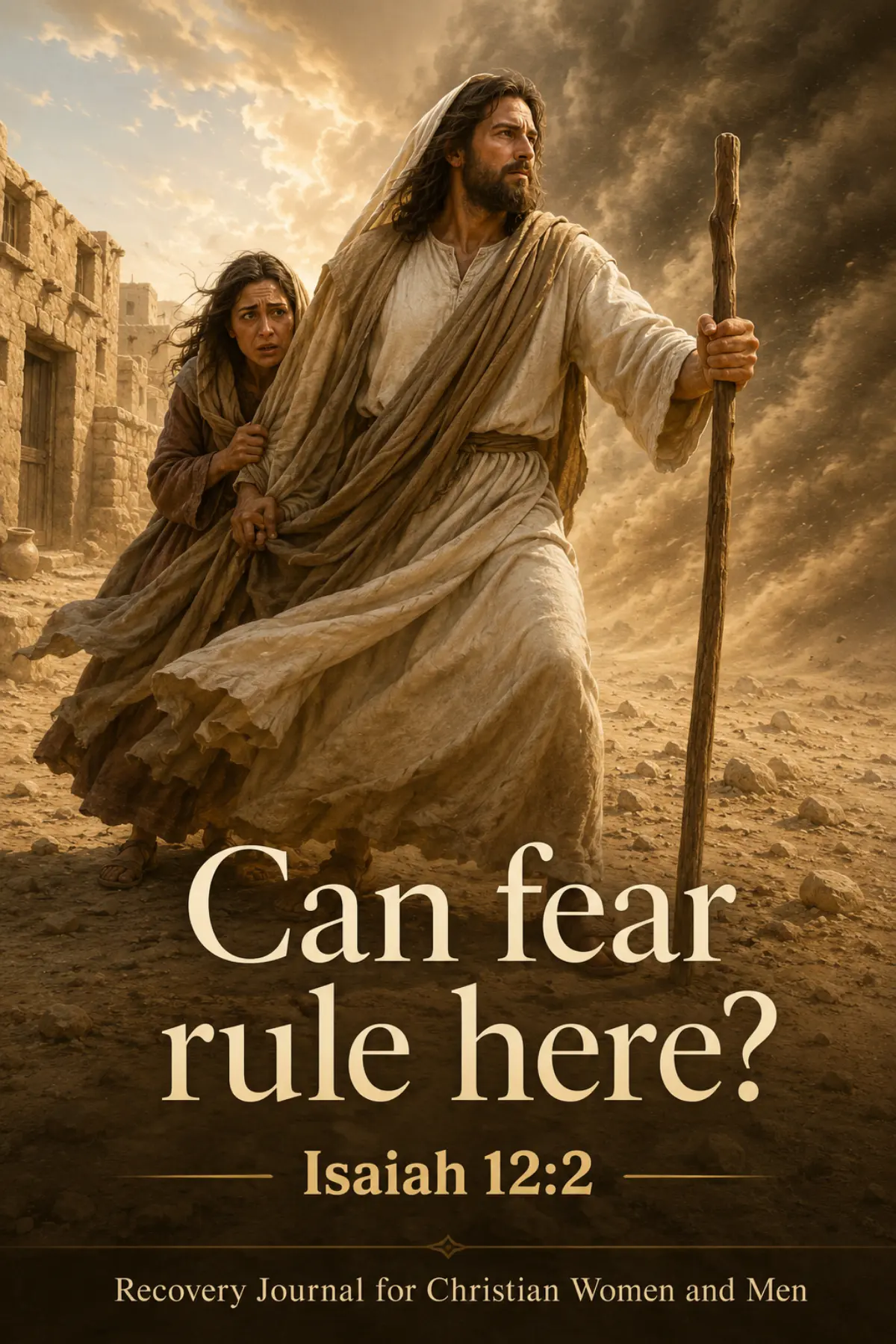
A robed Christ figure stands with a staff in a violent dust storm, shielding a frightened woman who clings close behind Him, with ruined stone buildings nearby and the words Can fear rule here? over Isaiah 12:2. The threat is visible, but so is the defence: fear surrounds the scene, yet the central figure stands between the frightened person and the storm.
Biblical Insight
Isaiah 12 is a song of praise after words of judgement, rescue, and restoration. It does not come from a shallow place. It follows the reality of sin, danger, discipline, and the need for God’s saving action. That gives the verse its weight. “Surely God is my salvation” is not cheerful optimism. It is a declaration made by people who know they cannot save themselves.
The verse is personal. “God is my salvation.” Not merely salvation in theory. Not merely salvation for someone else. The speaker takes hold of the truth personally and says, “I will trust and not be afraid.” This does not mean fear never rises. It means fear is no longer allowed to occupy the throne.
The repeated wording, “The Lord, the Lord Himself,” presses the point. The strength of the believer is not located in temperament, courage, religious performance, or emotional stability. The Lord Himself is strength. The Lord Himself is defence. The Lord Himself has become salvation. The verse places the whole weight on God’s identity and action.
This is important for grieving Christians because grief often produces fear that feels physical. Fear of another loss. Fear of being alone. Fear of money running out. Fear of the future. Fear of breaking down. Fear that faith will not survive the pressure. Isaiah 12:2 does not shame that fear. It gives fear an answer.
The verse does not promise that no frightening thing will ever happen. It does not promise instant calm, quick recovery, or a life free from trouble. It does not tell you that trusting God will remove every visible threat. It calls you to trust God as salvation, strength, and defence in the presence of fear.
That distinction matters. Christian trust is not denial. It is not pretending the storm is harmless. It is not calling danger imaginary. It is refusing to let danger become lord. The Lord Himself is the one who saves, strengthens, and defends. Fear may be present, but it is not ultimate.
For someone grieving, this verse can become a steady prayer: “The Lord Himself is my strength and my defence.” You may need to say it before you feel it. You may need to write it while still trembling. That is not hypocrisy. That is faith speaking to fear before fear has finished speaking to you.
In Application
- Name the fear plainly. Do not hide it under vague words. Write down what you are afraid will happen next.
- Ask where fear has started making decisions for you. Fear may advise caution, but it must not become your lord.
- Use Isaiah 12:2 as a spoken confession: “The Lord Himself is my strength and my defence.” Say it when your own strength feels gone.
- Do not demand instant calm from yourself. Trust may begin as obedience while your body still feels afraid.
Practical Journaling
Reflect on Isaiah 12:2, then write honestly:
- What fear is trying to rule my thoughts, choices, or prayers right now?
- Where has grief made fear sound like wisdom?
- What would it mean today to trust God as my strength and defence, not merely as an idea?
- What one decision do I need to take back from fear and place before the Lord?

Follow on Medium for More Studies
If writing feels too heavy today, write only this: Lord, do not let fear rule where You are my salvation.
The Faith Recovery Journal explores this and many similar topics for Christians facing grief, loss, and recovery.