
Proverbs 31:10–12 — A Wife of Noble Character
A Good Wife is Treasure Enough
"A wife of noble character who can find? She is worth far more than rubies."
— Proverbs 31:10 (NIV)
Reflection
You can lose a wife and still feel the weight of her worth everywhere. Her clothes are still there. Her side of the bed is still there. Her photograph is still there. The room still knows her shape, even when she is gone. People may speak about moving forward, but you are still sitting in the place where her absence keeps answering back.
Proverbs 31:10 names something grief already knows: a faithful wife is not replaceable. She is worth far more than rubies. That is not romantic decoration. It is a statement of value. When death takes someone of such worth, the loss is not small, tidy, or quickly absorbed. You do not simply lose company. You lose counsel, presence, humour, memory, partnership, habits, touch, ordinary speech, and the quiet knowledge that someone was there with you.
Start with the free sample
No email. No signup.
That is why this verse can hurt before it comforts. If your wife was precious, then losing her is not merely sad. It is a wound against the order of your home. It can feel as though the whole structure of your life has been knocked crooked. You may still go to work, still answer people, still manage appearances, yet come back to a bedroom where everything speaks more honestly than conversation does.
Scripture does not ask you to reduce her value so the grief feels manageable. Proverbs 31:10 allows you to say that what you lost was precious. Her worth was real. Her life mattered. Her character, care, labour, faithfulness, and presence were not ordinary background items. They were gifts you now miss with your whole body.
Love does not become small because death has made it silent.
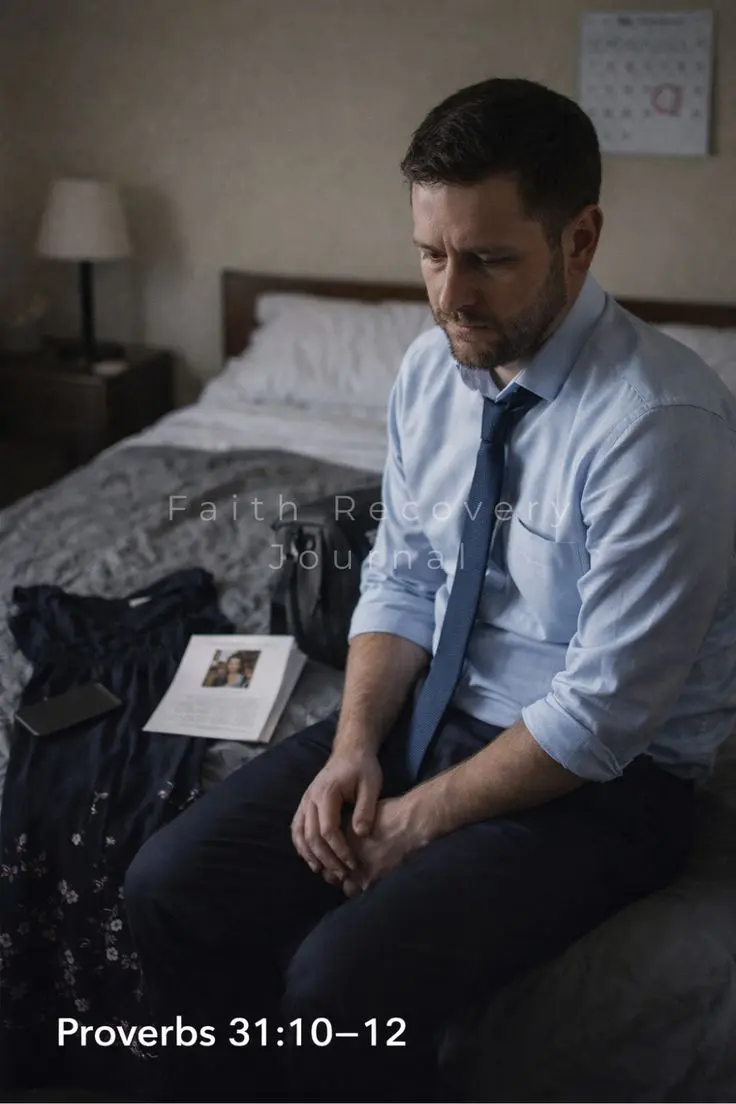
The man’s bowed posture, the half-made bed, the personal belongings, and the printed photograph all show grief sitting among the ordinary objects of married life. Nothing in the room is dramatic, yet everything feels charged with absence. Proverbs 31:10 belongs there because the verse gives language to the value of the woman who is gone. The grief is heavy because the worth was real.
Biblical Insight
Proverbs 31:10 begins the well-known passage describing a wife of noble character. The chapter is not a shallow checklist for women to perform under pressure. It is a poetic tribute to wisdom embodied in faithful, capable, God-fearing life. The woman described is strong, diligent, generous, trusted, wise, and deeply valuable to her household.
The question, “A wife of noble character who can find?” does not imply that such a woman is impossible. It emphasises rarity and worth. The verse then declares that she is worth far more than rubies. In Scripture, this kind of comparison points to value beyond money. Her worth cannot be measured by possessions, convenience, status, or usefulness alone.
For a grieving husband, this matters because grief often fights against memory in two directions. Some days you may idealise everything because you cannot bear the complexity. Other days you may feel guilt because the marriage had ordinary human tensions, failures, and unfinished conversations. Proverbs 31:10 does not require false perfection. It allows you to honour genuine worth. A wife can be deeply precious without being flawless. A marriage can be worth mourning honestly without being turned into a fiction.
This verse does not promise that honouring her will remove the pain. It does not say that recognising her worth will make the empty room easier. It does not turn bereavement into a neat lesson about gratitude. It gives you permission to tell the truth: she was precious, and her absence hurts because her presence mattered.
The wider biblical witness also matters here. God sees widows and widowers, the lonely, the bereaved, and those whose homes have been altered by death. Scripture does not treat grief as weakness or love as disposable. Jesus Himself wept at a tomb. Christian hope does not require emotional amnesia. Resurrection hope does not mean pretending the separation is harmless.
For the struggling Christian, Proverbs 31:10 can become a way to honour without worshipping the past. You can thank God for her worth. You can grieve what death has taken. You can name what you miss. You can carry memory without letting despair become your only companion. The verse does not tell you to stop grieving. It teaches you to grieve someone whose value deserves to be named.
In Application
- Name what was precious about her without forcing the memory into perfection. Honour her real worth, not an artificial version of her.
- Let ordinary objects speak honestly. Clothes, photographs, calendars, and rooms can become places for prayer rather than evidence that you should be “over it.”
- Bring guilt and gratitude into the same prayer. You may miss her deeply and still carry regrets. God can receive both.
- Do one act of honour that fits your grief today: write a memory, care for something she loved, pray thanks for her life, or speak her name without apology.
Practical Journaling
Reflect on Proverbs 31:10, then write honestly:
- What part of her worth do I most need to name before God today?
- What ordinary object, room, photograph, or routine makes her absence feel strongest?
- Where am I tempted to minimise the grief because I think other people are tired of hearing about it?
- How can I honour her honestly without pretending the loss no longer hurts?

Follow on Medium for More Studies
If writing feels too heavy today, simply say her name before God and thank Him for what was precious.
The Faith Recovery Journal explores this and many similar topics for Christians facing grief, loss, and recovery.