
Is Losing Biblical Certainty a Form of Grief?
A recent study by the Family Research Council and Arizona Christian University's Cultural Research Center reports a striking decline in biblical conviction amongst regular churchgoers. In a single year, self-identification as pro-life amongst monthly church attenders fell from 63 per cent to 43 per cent. Only 46 per cent upheld a traditional view of family, falling to 34 per cent amongst Gen Z believers. Confidence that Scripture speaks clearly about abortion declined from 65 per cent to 51 per cent.
You feel something has quietly slipped out of place inside you, and the certainty that once held everything together is no longer there.
Those figures are usually discussed in terms of doctrine, politics, cultural change or discipleship. Yet there is another possibility worth considering. What happens emotionally when beliefs that once supplied identity, belonging, moral direction and a coherent understanding of the world begin to weaken?
Grief is not confined to bereavement. We can grieve lost relationships, lost health, lost futures, lost roles and lost versions of ourselves. It is therefore reasonable to ask whether a person can also grieve the loss of religious certainty, especially when that certainty once shaped almost every part of life.
Lead researcher Dr George Barna observed that "once-firm beliefs about family, life, and morality are giving way to cultural influence and personal opinion." When this happens, something deeper than a change of opinion may be taking place. A believer can find that the theological ground beneath them no longer feels as solid as it once did.

The Isolating Nature of Spiritual Drift
As I have noted in my journal, grief isolates. It can separate us from other people, from normality and from the person we remember being before the loss.
Something similar can happen when a Christian's convictions begin to move away from those of the faith community to which they once felt securely attached. The person may still attend church, sing familiar hymns and participate in worship, yet privately feel increasingly detached from the theological centre of that community.
Those who remain firmly committed to historic Christian teaching may experience their own form of grief as they watch people they love move away from beliefs they once shared. Meanwhile, the person whose convictions are changing may experience a different loss: certainty, belonging and the sense that there is a stable framework within which life's difficult questions can be understood.
Spiritual drift rarely arrives as a single dramatic moment. More often, one conviction is reconsidered, then another. Cultural assumptions begin to carry more weight. Personal judgement occupies territory once given to Scripture. The change can be gradual enough that the emotional cost is not recognised until the old certainty has already gone.
When One Loss Makes Another Easier
The idea of a gateway is useful here, provided it is handled carefully. A gateway does not guarantee that someone will continue down a particular road. It changes what feels possible.
Once a person becomes comfortable setting aside biblical teaching on one difficult or culturally contentious subject, doing so elsewhere may require less resistance. A question that once seemed settled becomes negotiable. A second question can then be approached in the same way.
This is where spiritual uncertainty can begin to produce something that resembles grief. The loss is not merely intellectual. The believer may be losing part of the framework through which marriage, family, sexuality, suffering, morality, death and hope were previously understood.
The resulting separation from one's natural spiritual home can leave a person unusually exposed. Questions about meaning, identity and belonging may become harder rather than easier. The believer may continue to possess faith whilst becoming less certain where that faith now leads.
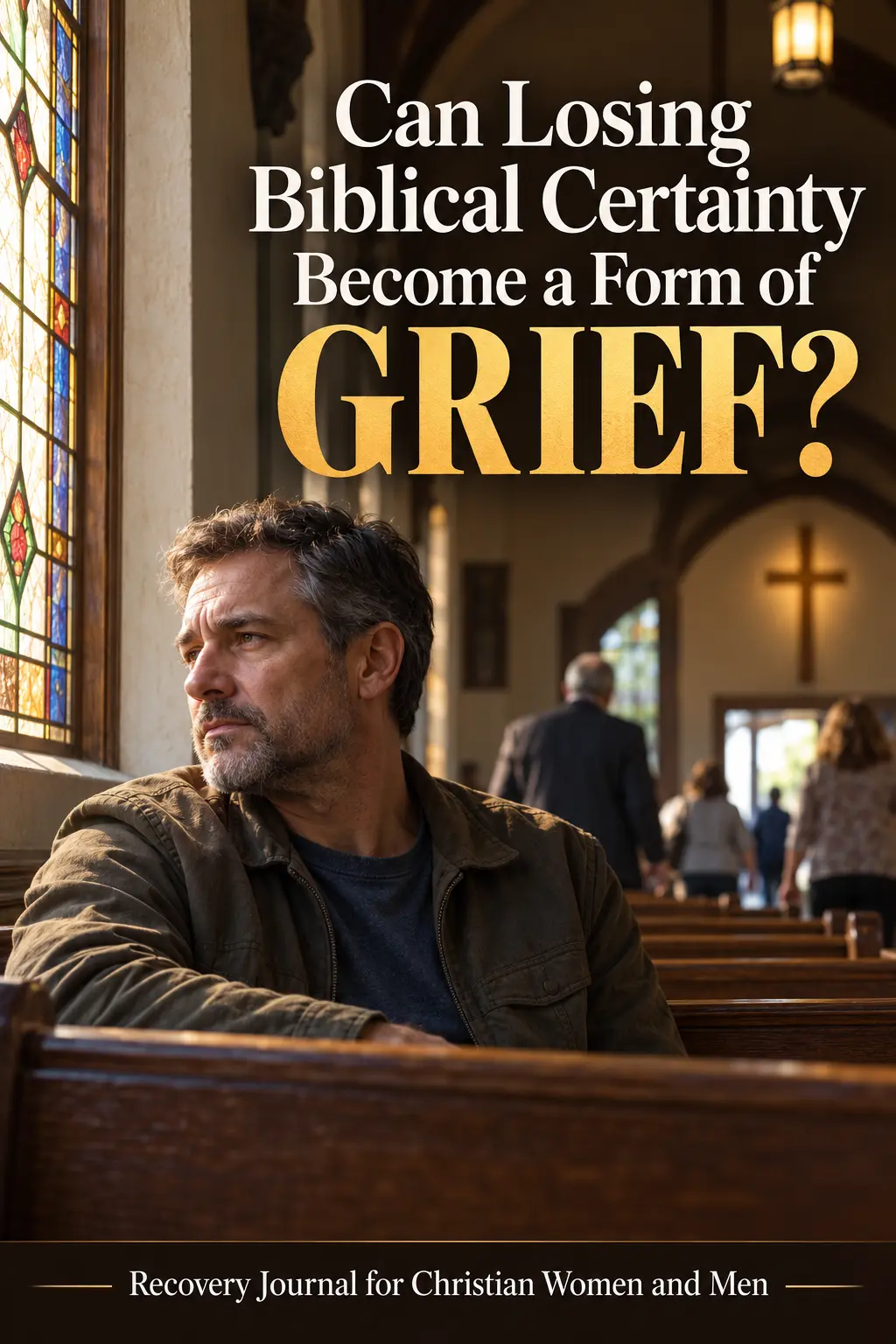
Start with the free sample
No email. No signup.
What Happens When Convictions Crumble?
Foundational beliefs do more than tell us what to think. They help us decide who we are, what matters and where we belong. When those beliefs weaken, their absence can be felt in places far beyond theology.
A person may begin to question values that once seemed obvious. Relationships within church can become strained. Prayer may feel different. Scripture may become more difficult to approach. Decisions that were once made within a settled moral framework can begin to feel uncertain.
David Closson, co-author of the FRC report, describes the trend as "a discipleship problem, not primarily a political one." That matters because discipleship is concerned with far more than the possession of correct opinions. It helps form the framework through which Christians understand themselves and the world around them.
When part of that framework disappears, grief may follow. The person has lost something that once provided stability, whether or not they would ever use the word grief to describe what they are experiencing.
Research on religious and spiritual struggle has found associations with depression and suicidality, particularly where faith crises involve loss of meaning, conflict with God, isolation or profound doubt. That does not mean spiritual uncertainty inevitably leads to self-harm. It does mean that the emotional consequences of a collapsing religious framework can, for some people, become very serious indeed.
The Road of Small Accommodations
Major changes in belief are often made up of smaller ones. Few people wake one morning having decided to abandon everything they previously believed. A conviction is softened. An exception is made. A difficult teaching is reinterpreted because another explanation feels more comfortable or more compatible with the surrounding culture.
Each decision can make the next one easier to justify. Over time, the distance travelled may become considerable even though no individual step seemed particularly dramatic.
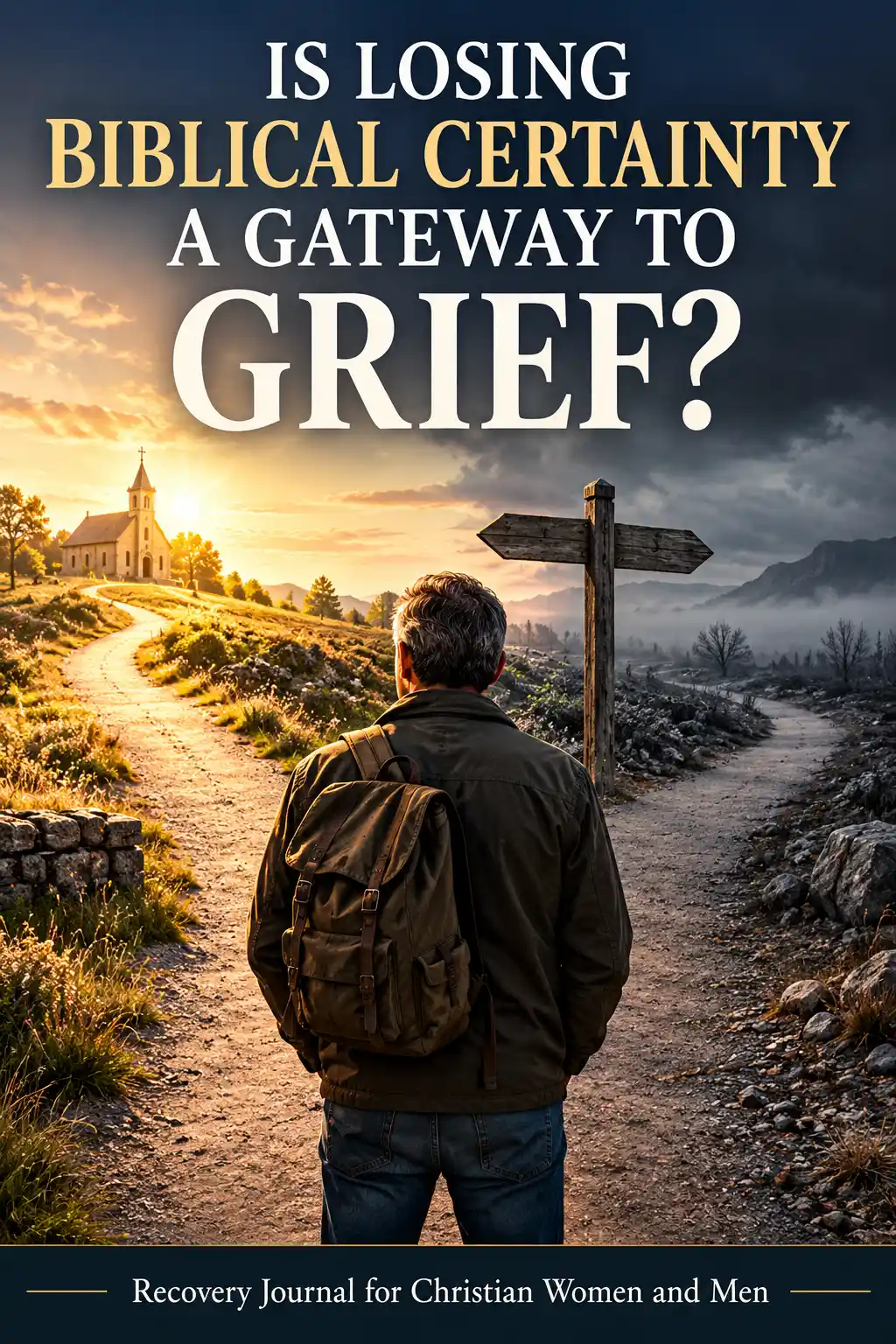
For a Christian who once regarded Scripture as authoritative, this can produce a peculiar kind of disorientation. The old framework has weakened, but no equally comprehensive replacement has taken its place. Cultural opinion changes quickly. Personal judgement can change with experience, emotion and circumstance. The person may therefore gain freedom from one source of authority whilst discovering that they have also lost a source of stability.
This is what I mean by gateway grief. The first loss may appear comparatively small, yet it can leave the believer more exposed to subsequent losses of belonging, meaning, identity and certainty.
Recognising What Has Been Lost
There is little value in treating someone experiencing this kind of spiritual uncertainty with contempt. If grief is genuinely involved, condemnation is unlikely to illuminate what has happened.
A more useful question is: what have you lost?
Perhaps it is confidence in Scripture. Perhaps it is trust in a church. Perhaps a doctrine that once made sense no longer does. Perhaps cultural arguments have begun to seem more persuasive than Christian ones. Perhaps there is embarrassment about beliefs that once felt natural. Perhaps the person simply no longer knows what they believe.
Giving the loss a name does not settle the theological question. It does, however, make honest examination possible.
Rebuilding from the Ruins
Dr Barna concludes with a reason for hope: "The vast majority of churchgoers still affirm core biblical truths about God and human value. These convictions provide a foundation for rebuilding."
Rebuilding requires more than reassuring people that everything will work itself out. Barna calls for "courageous leadership: pastors, parents, and educators willing to confront increasing cultural confusion with biblical clarity."
There is also a pastoral task. Christians struggling with doubt, changing convictions or cultural pressure need somewhere they can speak honestly without pretending that difficult questions do not exist. That includes making room for honest conversation about doubt while remaining equally honest about what Christian teaching actually says.
Some people who revisit their convictions will return to beliefs they had begun to abandon. Others may continue to struggle. The important point is that the emotional consequences of spiritual change deserve to be recognised alongside the theological ones.
A person can lose a belief and discover that they have also lost part of their identity, community, history and sense of where they belong. That is why biblical uncertainty can become a form of grief.
For Christians, the answer cannot simply be to manufacture certainty by force of will. It is to examine what has changed, what has been lost, why it was lost and whether the foundations that once seemed secure deserve another look.
The warning in 1 Peter is addressed to believers precisely because faith can come under pressure. Peter does not assume that Christians are immune from vulnerability. He tells them to remain alert, resist what would pull them away and stand firm alongside other believers who are also suffering.
"Be alert and of sober mind. Your enemy the devil prowls around like a roaring lion looking for someone to devour. Resist him, standing firm in the faith, because you know that the family of believers throughout the world is undergoing the same kind of sufferings. And the God of all grace, who called you to his eternal glory in Christ, after you have suffered a little while, will himself restore you and make you strong, firm and steadfast."
📖 Download the Extended Sample (PDF, 134 pages)
(No email or signup required)