
Colossians 3:12–13 — How Do You Forgive When the Hurt Still Matters?
Compassion Without Pretending the Hurt Was Small
"Therefore, as God's chosen people, holy and dearly loved, clothe yourselves with compassion, kindness, humility, gentleness and patience. Bear with each other and forgive one another if any of you has a grievance against someone. Forgive as the Lord forgave you."
— Colossians 3:12–13
Reflection
Grief can leave grievances behind. Sometimes the wound is not only that someone died, left, failed, or suffered. It is also what other people did around the loss: the words they said, the help they withheld, the pressure they added, the selfishness they showed, the mockery, silence, avoidance, or blame. You may be carrying sorrow and offence at the same time.
The scene shows a woman standing in soft light, clothed in white and blue, with open hands extended in front of her. Behind her, a dark crowd of figures bends and gathers in shadow. Some look hostile. One appears to hold a raised weapon. The woman is calm, but not naïve; she stands in contrast to the threatening darkness behind her. At the top, the text reads “Colossians 3:12–13.” The emotional meaning is clear: compassion, kindness, humility, gentleness, patience, and forgiveness are not easy garments to wear when grievance stands close behind you.
That is why this passage matters. Paul does not speak of forgiveness in a world without wrong. He says, “if any of you has a grievance against someone.” The grievance is not denied. The hurt is not erased. The wrong is not made imaginary. The command begins exactly where many grieving Christians live: there is a real grievance, and the heart must decide what to wear before God.
Start with the free sample
No email. No signup.
Forgiveness after grief can feel impossible because the wound may be tied to someone you can no longer speak to, someone who will not repent, or someone who still acts as if nothing serious happened. You may fear that forgiving means excusing, minimising, reconciling too quickly, or pretending you were not harmed. Colossians 3:12–13 does not require that lie.
Forgiveness is not the same as saying the offence did not matter. It is not the same as trusting an unsafe person. It is not the same as allowing continued harm. It is a serious Christian act rooted in the forgiveness you have received from the Lord. It releases vengeance from your own hands and brings the grievance under Christ’s authority.
Forgiveness does not make the wound fake.
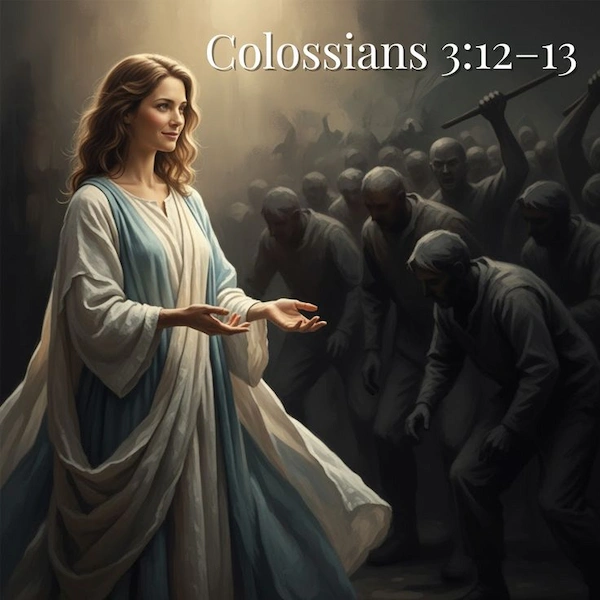
The woman’s open hands matter because they are not clenched. Her posture suggests release, mercy, and restraint. The shadowed crowd behind her shows the pressure of hostility, grievance, and fear. She is not standing in an easy room with harmless people; she is standing in light while darkness presses close. For someone grieving, this is the hard call of the passage: to put on Christlike mercy without pretending the darkness was gentle.
Biblical Insight
Colossians 3 is about the new life of those who belong to Christ. Paul tells believers to set their hearts on things above, to put to death what belongs to the old self, and to put on the new self, which is being renewed in the image of its Creator. The language of clothing is deliberate. Christians are to take off what belongs to the old life and put on what fits their new identity in Christ.
In verses 12–13, Paul grounds the command in identity: “as God’s chosen people, holy and dearly loved.” That comes before the virtues. Compassion, kindness, humility, gentleness, patience, bearing with one another, and forgiveness are not presented as personality traits for naturally soft people. They are the clothing of people who have first been loved by God.
The list is not sentimental. Compassion sees pain. Kindness acts for another’s good. Humility refuses to make self the centre. Gentleness restrains harshness. Patience endures difficulty without rushing into sinful reaction. Bearing with one another recognises that life in the body of Christ includes strain. Forgiveness faces real offence and releases it before God.
The phrase “if any of you has a grievance against someone” is important. Paul does not pretend grievances will never exist among believers. He assumes they will. The Christian life is not free from offence, disappointment, misunderstanding, or hurt. The question is how forgiven people respond when grievance becomes real.
“Forgive as the Lord forgave you” is the centre of the command. The measure is not how easily the offender apologises, how quickly your emotions settle, or how naturally forgiving feels. The pattern is the Lord’s forgiveness. Christians forgive because they have been forgiven by Christ. That does not make forgiveness easy, but it gives it a theological root deeper than mood.
This verse does not promise that forgiveness will remove all pain immediately. It does not promise restored trust, safe reconciliation, or a repaired relationship in every case. Trust may need time. Boundaries may be necessary. Justice may still matter. Repentance may need to be sought. Forgiveness should never be twisted into permission for abuse, manipulation, or continued harm.
For a grieving Christian, this matters because grief can intensify grievances. Pain makes old offences feel sharper. Family tensions may grow around funerals, care decisions, money, silence, absence, or blame. People may say foolish things when you are most vulnerable. Some may fail you badly. The command to forgive does not deny any of that. It calls you to bring those grievances under the Lord who forgave you.
It also matters because unforgiveness can become another weight added to grief. Bitterness may feel protective at first, but over time it can keep the wound open in a different way. Forgiveness does not mean you stop grieving. It means grief does not have to become a permanent courtroom where you rehearse the same charge endlessly with yourself as judge, witness, and prisoner.
Paul’s command is not merely private therapy. It is life in Christ’s body. God’s chosen, holy, dearly loved people are to become recognisable by the clothing of mercy. That clothing may feel heavy at first. You may have to put it on one prayer at a time, one memory at a time, one resisted reaction at a time. But it belongs to the new life Christ has given.
In Application
- Name the grievance honestly before God instead of pretending compassion means silence about real harm.
- Separate forgiveness from unsafe trust; releasing vengeance does not require removing wise boundaries.
- Put on one virtue from the passage today: compassion, kindness, humility, gentleness, or patience.
- Remember that forgiveness is rooted in what the Lord has done for you, not in the offender’s ability to make the hurt feel small.
Practical Journaling
Reflect on Colossians 3:12–13, then write honestly:
- What grievance has grief made harder for me to release?
- Which part of Paul’s command feels most difficult right now: compassion, kindness, humility, gentleness, patience, bearing with someone, or forgiving?
- Where do I need to distinguish forgiveness from pretending, excusing, or trusting too quickly?
- How does remembering that I am chosen, holy, dearly loved, and forgiven by the Lord change the way I face this grievance?

Follow on Medium for More Studies
If writing feels too heavy today, pray, “Lord, help me bring this grievance under Your mercy without lying about the hurt.”
The Faith Recovery Journal explores this and many similar topics for Christians facing grief, loss, and recovery.