
Psalm 77:2–3 — My Spirit Grew Faint
When Prayer Continues and Comfort Still Does Not Come
"When I was in distress, I sought the Lord; at night I stretched out untiring hands, and I would not be comforted. I remembered you, God, and I groaned; I meditated, and my spirit grew faint."
— Psalm 77:2 (NIV)
Reflection
You can seek the Lord and still feel no comfort. That sentence may sound wrong if you have only been given tidy answers about prayer, but Psalm 77 says it plainly. Distress comes. The sufferer seeks God. The hands stay stretched out through the night. And comfort still does not come.
That is a hard place for a grieving Christian. Not because you have stopped believing, but because belief itself has become painful. You remember God, and instead of immediate relief, you groan. You meditate, and instead of strength returning, your spirit grows faint. The problem is not that you have refused prayer. The wound is deeper: even prayer has become exhausting.
Psalm 77:2 gives language for the night when faith is still reaching but consolation is absent. It does not accuse the sufferer of being dramatic. It does not rush him into praise. It does not pretend that every prayer produces visible calm. It allows distress to remain distress in the presence of God.
Start with the free sample
No email. No signup.
There are nights when you do not need someone to explain prayer to you. You need Scripture to admit what is happening. You sought the Lord, and the ache remained. You stretched out your hands, and the answer did not arrive in the way you begged for it. You remembered God, and the memory made the pain sharper because you could not understand why He seemed so distant.
This verse does not make your distress neat. It gives your distress a place to stand before God without lying. You are not required to call yourself comforted when you are not comforted. You are not required to pretend your spirit is strong when it has grown faint.
Uncomforted prayer is still prayer.
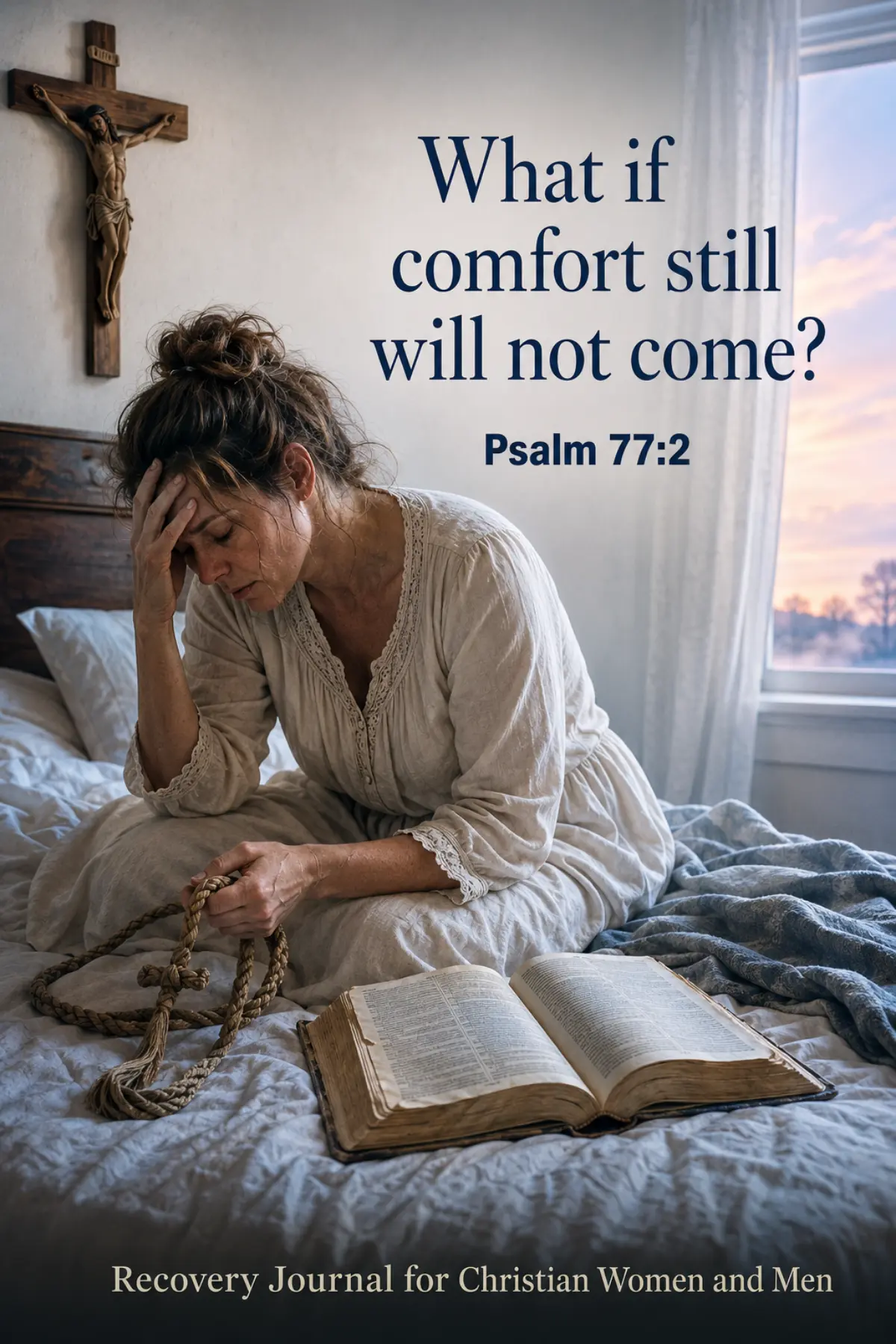
The prayer rope, the open Bible, and the crucifix show someone still reaching for God, yet still sitting in pain. Nothing in the room suggests relief has arrived. That is the point. Psalm 77:2 is not about prayer that instantly soothes you, but prayer that continues when distress remains. The bowed posture and tired face reflect the Christian who has not stopped seeking the Lord, even though comfort still has not come. The scene reflects how persistent, exhausted, unrelieved prayer is not failure. It is one of the very conditions this verse was written to name.
Biblical Insight
Psalm 77 is a psalm of Asaph, and it begins in distress rather than resolution. The speaker cries out to God. He remembers God. He searches his memory. He asks whether the Lord will reject forever, whether His love has vanished, and whether His promises have failed. This is not mild sadness. It is spiritual anguish spoken directly to God.
Psalm 77:2 sits at the beginning of that anguish. The sufferer does what many Christians are told to do: he seeks the Lord. He does not abandon prayer. He does not numb himself into silence. He stretches out his hands at night. The language suggests persistence, need, and refusal to stop reaching. Yet the verse also says, “I would not be comforted.”
That phrase matters. Scripture does not deny the reality of unrelieved sorrow. It does not say that seeking God always produces an immediate feeling of comfort. It does not say that remembering God always brings instant peace. In this psalm, remembering God leads to groaning, and meditation leads to faintness of spirit.
This does not mean God is absent. It means the experience of distress can be so severe that even true prayer feels painful. A grieving Christian may know the promises of God and still feel unable to rest in them. That is not the same as unbelief. It may be the cry of faith under pressure.
The psalm does not end where it begins. Later, the speaker remembers the deeds of the Lord and reflects on God’s mighty acts. But the psalm does not skip the night in order to get there. The early verses are not a mistake to be corrected. They are part of the prayer. Scripture allows the fainting spirit to speak before it can sing.
Psalm 77:2 does not promise that comfort will arrive on command. It does not promise that grief will become manageable after one night of prayer. It does not treat distress as a problem solved by better wording. Instead, it shows that God gives His people language for the stage where comfort has not yet come.
That is why this verse matters. Some Christians suffer twice: first from the grief itself, then from the fear that their grief is spiritually unacceptable. Psalm 77 pushes back against that fear. The sufferer is not outside Scripture. He is inside it. His groaning, faintness, and uncomforted prayer have been given a place in the Bible.
For someone grieving, this means you do not have to force a false ending onto the night. You may seek the Lord honestly. You may say that you are distressed. You may admit that comfort has not come. You may bring God your groaning without pretending it is praise. The Lord is not honoured by dishonest composure. He receives truthful prayer.
In Application
- Stop calling yourself faithless because comfort has not arrived. Psalm 77 shows a believer seeking God while still uncomforted.
- Tell God the truth about the night hours. Do not tidy the prayer before you bring it to Him.
- Let groaning become part of prayer when words fail. Scripture does not require your distress to sound polished.
- Keep a small record of what you prayed, not to measure progress, but to honour the fact that you kept reaching toward God.
Practical Journaling
Reflect on Psalm 77:2, then write honestly:
- Where have I sought the Lord and still felt no comfort?
- What do I keep reaching for in the night, even when relief does not come?
- What happens inside me when I remember God right now: comfort, groaning, anger, longing, fear, or silence?
- What would an honest prayer sound like if I stopped trying to make it acceptable?

Follow on Medium for More Studies
If writing feels too heavy today, write only this: Lord, I am still reaching for You.
The Faith Recovery Journal explores this and many similar topics for Christians facing grief, loss, and recovery.