
Hebrews 11:6 — Does Begging God Count as Faithlessness?
When Desperation Makes You Question Your Faith
"And without faith it is impossible to please God, because anyone who comes to him must believe that he exists and that he rewards those who earnestly seek him."
Hebrews 11:6 (NIV)
Reflection
You can beg God for so long that you begin to accuse yourself. The same cry keeps returning. The same need will not leave. The same sorrow drives you back to Him again, and then another fear appears: if I really had faith, would I still sound this desperate?
Hebrews 11:6 does not treat coming to God as faithlessness. It says that anyone who comes to Him must believe that He exists and that He rewards those who earnestly seek Him. That matters when prayer has lost its composure. Earnest seeking is not always calm. Sometimes it is broken, repeated, strained, and soaked in need.
The wound here is not only grief. It is the shame that begins to cling to your prayer. You may think begging proves you have failed to trust God. You may think real faith should be quieter, steadier, less insistent. But this verse places coming to God inside faith, not outside it. The one who comes still believes there is Someone to come to.
Start with the free sample
No email. No signup.
Grief can make prayer feel humiliating. You may come without dignity, without eloquence, without spiritual confidence, without any fresh words to offer. You may come asking for what has already been denied, delayed, or left unanswered. You may come because there is nowhere else your sorrow can honestly go.
That kind of coming is not nothing. It is not empty religious reflex. It is not proof that God has rejected you. Hebrews 11:6 gives you a firmer way to understand it: when you come to God, you are still acting on the belief that He is real, that He hears, and that seeking Him is not wasted before Him.
Begging God is still coming to God.
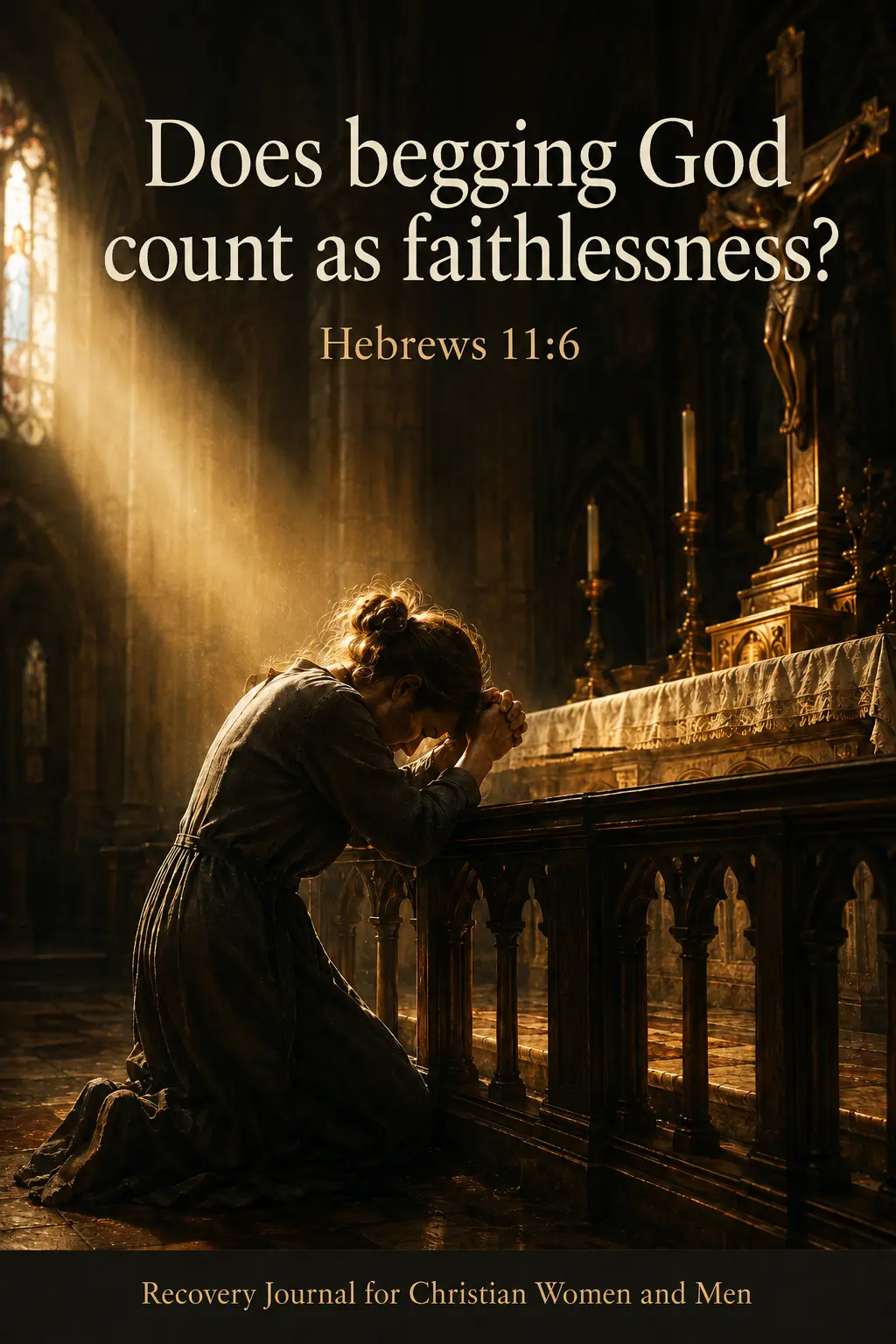
A grieving woman kneels at a church rail beneath warm light, hands clasped before the altar and crucifix, with the words Does begging God count as faithlessness? above Hebrews 11:6. The scene reflects how desperate prayer is not the collapse of faith, but the battered act of still seeking God when grief has stripped prayer of composure.
Biblical Insight
Hebrews 11 speaks about faith by showing men and women who trusted God while they could not yet see the full outcome. Faith in this chapter is not presented as emotional ease. It is not a mood of unbroken confidence. It is the Godward response of people who act because they believe God is real, trustworthy, and worth obeying even when the visible situation remains unfinished.
Hebrews 11:6 comes after the mention of Enoch, who pleased God. The verse then makes a larger statement: without faith it is impossible to please God. That can sound frightening when grief has already weakened you. If you hear the sentence as a demand to feel spiritually impressive, it may land like an accusation. But the verse immediately explains the shape of the faith it is describing. The one who comes to God must believe that He exists and that He rewards those who earnestly seek Him.
That explanation matters. Faith is not first measured by whether your prayer sounds composed. It is not measured by whether you have stopped crying, stopped asking, stopped needing, or stopped trembling. The verse points to coming and seeking. It asks whether you still turn toward God as the One who is real and the One whose response matters.
The word "earnestly" should not be made tame. Earnest seeking is serious seeking. It is not casual interest. It is not polite religious curiosity. In grief, earnest seeking may look like kneeling again when you feel ashamed of needing to kneel again. It may look like asking again when you fear you should have accepted silence by now. It may look like telling God that you do not understand Him, while still refusing to make anything else your final refuge.
This verse does not promise that every prayer will be answered in the exact form requested. It does not promise that begging will produce the outcome you want, or that visible relief will arrive by a certain time. "He rewards those who earnestly seek him" must not be turned into a formula for controlling God. The reward is bound to God Himself: His faithfulness, His mercy, His final justice, His keeping of those who come to Him, and His refusal to let earnest seeking be meaningless before Him.
That is why this verse matters to a grieving Christian. Grief does not only hurt; it interrogates. It asks why God has not acted as you begged Him to act. It asks whether repeated prayer is pointless. It asks whether desperation is evidence against your faith. Hebrews 11:6 does not answer by telling you to pretend you feel stronger than you do. It points you back to the reality of God and the significance of coming to Him.
There is a difference between demanding from God as though He were your servant and begging God because He is your only refuge. The first tries to control Him. The second still comes to Him. The first treats God as a means to an end. The second may be in agony, but it still recognises that no lesser answer can bear the full weight of the need.
So the question is not whether your prayer sounds desperate. The question is where your desperation goes. If grief has driven you to God again, even with tears, repetition, confusion, and shame, Hebrews 11:6 gives you reason not to despise that coming. Earnest seeking may look weaker than you expected. It may sound poorer than you wished. But it is not faithlessness to bring your need to God.
In Application
- Do not measure your faith by how calm your prayers sound. Hebrews 11:6 places the emphasis on coming to God and earnestly seeking Him.
- When shame says your begging proves unbelief, answer with the verse: the one who comes to God is still turning toward Him.
- Separate desperation from demand. You can beg honestly without pretending you have the right to control God's answer.
- Let repeated prayer expose your need without condemning your faith. Returning to God again may be the clearest act of trust you can manage today.
Practical Journaling
Reflect on Hebrews 11:6, then write honestly:
- Where have I mistaken desperate prayer for faithlessness?
- What request do I feel ashamed to keep bringing before God?
- When I come to God in grief, what does that coming still say about what I believe?
- How can I seek God earnestly today without pretending my need is smaller than it is?

Follow on Medium for More Studies
If writing feels too heavy today, pray only this: Lord, I am still coming to You.
The Faith Recovery Journal explores this and many similar topics for Christians facing grief, loss, and recovery.