
2 Corinthians 5:7 — How Do You Keep Going When Grief Hides the Way?
When You Cannot See What Comes Next but Still Have to Live Through Today
"For we live by faith, not by sight."
— 2 Corinthians 5:7 (NIV)
Reflection
Grief can take away your sense of direction. Before the loss, you may have known roughly what tomorrow was for, who would be beside you, what you were working towards, and how the next part of life was supposed to look. Afterwards, even ordinary decisions can feel strangely disconnected from any future you recognise.
Paul's words are demanding precisely because grief makes sight so persuasive. You can see the absence. You can see the changed house, the empty place, the disrupted routines, the practical problems, and the life that no longer fits the assumptions you once made. What you cannot see is how you will live with all of this months or years from now.
Living by faith in that condition does not require a clear map of what comes next. It asks whether you can continue entrusting yourself to God while the road ahead remains hidden. There may be no visible evidence yet that life will become easier, more settled, or even comprehensible.
Start with the free sample
No email. No signup.
Faith can therefore become very small and very practical. It may amount to praying when you have no answer, opening Scripture when concentration is poor, doing the next necessary thing without knowing what it leads to, or refusing to abandon God because grief has made the future impossible to picture.
You are allowed to admit that you cannot see the way ahead. Paul does not tell Christians to pretend that they can. Faith keeps trusting when sight has stopped giving you enough information to feel secure.
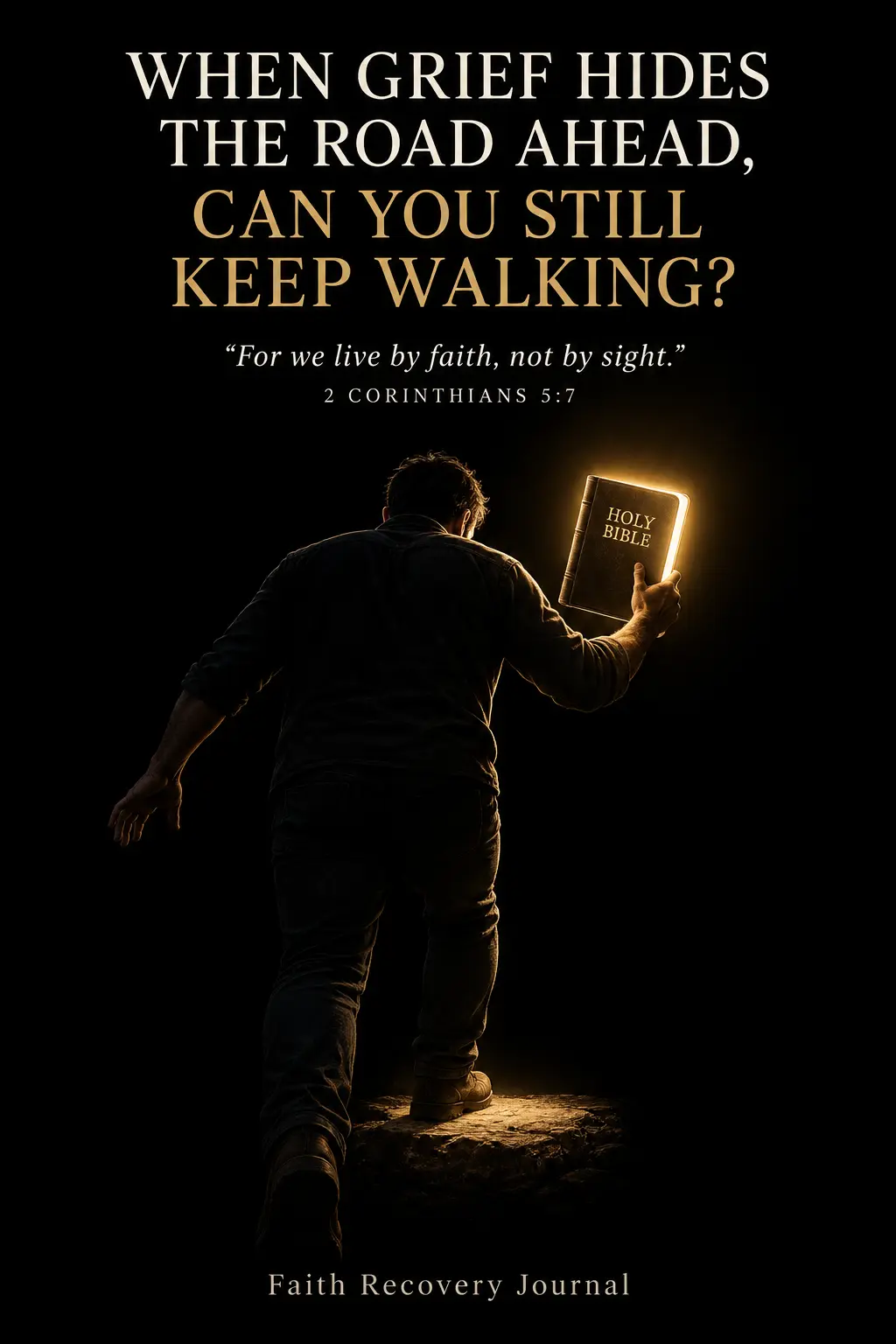
The scene reflects that tension through a man moving into darkness while holding a Bible that provides the only clear light around him. He cannot see the road ahead, but the verse turns his next step into an act of trust rather than a claim that the darkness has disappeared.
Biblical Insight
Second Corinthians 5:7 appears within Paul's discussion of mortality, earthly life, and the Christian hope of being with the Lord. In the surrounding passage, he describes believers as living in the body while being "away from the Lord" and says that they live by faith rather than by sight. His subject is therefore much larger than uncertainty about everyday decisions. He is speaking about how Christians live when the fullest reality they hope for is still unseen.
That context gives the verse particular weight in grief. Bereavement confronts people with what is painfully visible: death, absence, bodily decline, and the limits of earthly life. Christian faith points beyond those visible facts towards promises that cannot yet be inspected or proved by ordinary sight. Paul is describing the condition in which believers already live, not an exceptional spiritual test reserved for unusually difficult moments.
The verse also avoids promising that faith will reveal the whole route in advance. Paul himself lived with danger, weakness, opposition, uncertainty, and suffering. His confidence rested in God and in the future God had promised, while much of his immediate experience remained difficult and unresolved.
For a grieving Christian, living by faith may therefore involve accepting that some questions will remain unanswered for now. You may not know how your life will be rebuilt, how long the grief will dominate your thoughts, or what your relationship with God will feel like after such a loss. Faith allows you to continue without pretending that those answers are already visible.
In Application
- Separate the things you genuinely know from the frightening conclusions grief is encouraging you to make about the future.
- When the whole future feels impossible to face, bring your attention back to the next responsibility, prayer, conversation, or decision in front of you.
- Use Scripture as a source of direction when your own expectations about life no longer provide one.
- Allow uncertainty to remain uncertainty. Faith does not require you to invent an answer simply because you cannot yet see what comes next.
Practical Journaling
Reflect on 2 Corinthians 5:7, then write honestly:
- What part of your future has become hardest to imagine since your loss?
- Which visible facts about your grief are making you most afraid of what comes next?
- What would living by faith look like today if you stopped demanding a complete view of the future?
- What truth about God are you willing to trust even though you cannot yet see where your life is going?

Follow on Medium for More Studies
If writing feels too heavy today, repeat 2 Corinthians 5:7 slowly and consider only what trusting God requires of you today.
The Faith Recovery Journal explores this and many similar topics for Christians facing grief, loss, and recovery.